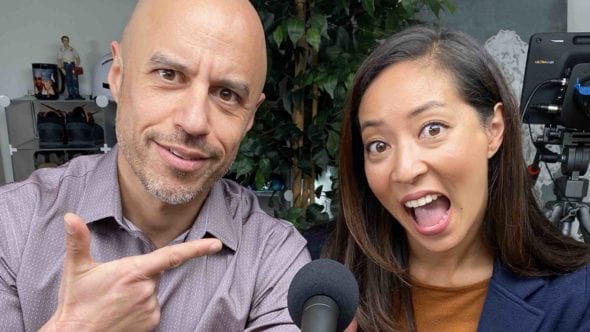
One phone call with cardiologist and recovering alcoholic Rishi Menon and BOOM: we’re instant Stepbrothers 😂 We dive into failing med school, 20 years of proving worthiness, recovery, suicidal ideation, burnout, the Enneagram as software, body changes after letting go, and why practice probably isn’t causative but shows up anyway.


Timecodes and topics:

00:00 Welcome — Spiritual Porn and the Only One Channel

1:31 What Spiritual Porn Actually Is (And Why It Feels Like Progress)

3:10 Two Brown Doctors, One Resonance — How We Connected

5:57 Failed Med School → 20 Years of Proving Worthiness 7:05

The Nuclear Reactor of Unworthiness

10:25 What Alcohol Did — Breaking the Mask

15:45 Recovery as Real Spiritual Practice

18:46 Burnout, Rock Bottom, and the Darkest Hour

22:45 The Reactor Metaphor — Chernobyl, Fallout, and What Stopped the Plan

31:11 Cannabis and Staring Into the Furnace

37:35 India, the Ashram, and Finding the Right Path

41:18 Surrendering the Whole Story

45:10 This Unraveled While I Was a Full-Time Cardiologist

55:19 The Enneagram as Software Running on Separation

1:12:02 Body Changes After Letting Go

1:18:42 The 2012 Las Vegas Awakening — and Why It Needed to Wait

1:27:05 The Strange Absence — Where Did the Seeking Go?

1:37:26 Practice Isn’t Causative — Correlation vs. Causation

1:40:14 Mindfulness Made Me More Neurotic, Not Less

1:45:28 Love as the Baseline, Not the Peak

1:54:54 The Bahiya Sutta, Mu, and Death Row Records

2:01:28 No Sunk Costs — Letting Go of the Medical Identity

2:06:52 Communalizing the Bliss — Two Doctors, One Resonance

The PayPal Tip Jar!


[0:01]
Name Game Begins
 
[0:00]How do you like to say your name? What’s your pronunciation of choice?
 
[0:02]Either way, like, dude, I say Rishi. I sometimes say Rishi, like.
 
[0:05]Yeah, yeah, however. And then your last name?
 
[0:07]Menon.
 
[0:07]Menon, okay.
 
[0:08]Remember the deodorant company by Menon?
 
[0:10]Yeah, by Menon. Yes.
 
[0:11]Yeah, exactly. Look at that. The tones and everything, man.
 
[0:14]Dude, Rishi Menon. Now I’ll never forget your last name because I’m just smelling my pits going, bro.
 
[0:19]What was it? Oh, Menon.
 
[0:20]That’s right. By Menon. Yes. That’s the start of the podcast. You realize we’re already going. I love it, man.
 
[0:26]Well, you know what sucks is that, But like, I use that for years. And now when I use that with people, they’re like, oh, I don’t know.
 
[0:31]I don’t get it because the 80s are done. That’s the problem. And the 90s are gone. I just saw a thing about stuff from the 80s that like kids like Gen X will still remember. You’re a solid millennial, right?
 
[0:42]I know. I’m like an elder millennial, if you will.
 
[0:45]Ah, yes, yes, yes. Geriatric millennial.
 
[0:47]Geriatric millennial. That’s right.
 
[0:49]Jerry Mill.
 
[0:51]Has anybody said that? Because that’s gotta be the thing now.
 
[0:53]No, because we just coined it. Just like our non-duality OnlyFans. What did you call it?
 
[0:58]Only once.
 
[0:58]Only once.
 
[0:59]Only one, right?
 
[1:00]Only, one. It’s non, oh yeah, that’s good. We have to do that.
 
[1:07]Spiritual porn, man. Spiritual porn.
 
[1:09]I mean, that’s what most of spirituality is. It’s selling something to the mind that’s like, oh, I want that. I want that to kind of enlightenment. I want like what Rishi and Zubin have because they can make jokes and still like pretend to be, you know, have all this equanimity and be okay with everything. When in reality, just before I was telling you, yeah, fuck all these people. Like Zubin gets mad.
[1:31]
Spiritual Porn Exposed
 
[1:29]Yes. He gets irritated. Right. Yeah.
 
[1:31]I mean, that’s so beautiful too, right? This idea that actually spiritual porn is the best example of it. It’s not the thing that it’s supposed to be, right? It’s this thing that feels pleasurable, but it’s not what it’s supposed to be at a deeper level, right? And then we can get off on it and go and go and go, never connecting with the thing we’re supposed to.
 
[1:48]I mean, that’s exactly it. It’s like we get, the mind wants something to chew on, something to progress it, something to grow its character. And so we give it spirituality because look, for you and me, you’re a cardiologist. I’m a hospitalist. We both went through the burnout. you threw in a wonderful punch called alcoholism, which was, it just took it to the next level. I wish I had that because it would have allowed me to last longer at Stanford. Instead, I didn’t have that agent of numbing. I had distraction into thought, which was my addiction and food, which was also a good addiction. But so then we give the mind an escape in the form of spirituality and we go, okay, regular porn feels like an addiction, but spiritual porn feels like progress. It’s progress.
 
[2:33]I’m working on myself. That’s exactly right. Oh my God. Full circle right there.
 
[2:37]Right, right. I’m working here. It’s like, what are you doing? I’m going on retreat. I’m dissociating. I’m like, uh, you know, forcing myself to do meta meditation, to have compassion for all beings, which, Hey, it’s all beautiful. Like you can have these tremendous experiences, mystical experiences, great unity consciousness. But I don’t think it has anything to do with the end of… the suffering of an apparent separate self. So spiritual porn, only one, dude, that’s gonna be our non-duality.
 
[3:07]Oh man, we’re off to a start here. Yeah, we’re going already. That’s brilliant, yeah.
 
[3:10]We’re going already. So just for the audience that doesn’t know why the fuck we’re even talking. So Rishi, was watching me on Instagram sometimes, sent me a message and was like, hey, I’m going through this stuff too, like X, Y, and Z, the awakening, whatever this bullshit is. I just love what you’re doing, whatever. And I was like, bro, hit me up by email. So the next thing you know, we get on a call and I’m like, do we just become best friends? It was like, it was total stepbrother scenario. Both Brown, both from the South Asian continent and both like looking at this whole thing is like, what even is this, right? And so then I was like, hey, come down and let’s just have a conversation.
 
[3:47]Oh, and it was amazing too, because we, from that email, I think we talked that morning, right? And it was this hour long conversation, hour plus. And we just ended it because we had other stuff to do. people were like, yeah, we should keep, did we just become best friends? That was the total moment because our journeys were so similar. Not that that matters, but it was interesting. There was a, like you say, there was a resonance there.
 
[4:05]There’s a resonance. Like your story is similar, but different, but the resonance when we were talking, like each of us were finishing the sentences and going, yeah, that’s how it is. And the truth is you don’t need that. But when it arises, it’s almost like, okay, what’s the next thing that would arise if we actually met in person and sat here. And what you guys are seeing is what that looks like. Cause we’ve talked for literally 10 minutes prior to this. We just met in physically in person. So, and we had that one conversation. So you can see the kind of natural flow, when, I hate to speak this way because it’s nonsense, but two apparent beings have gone through an apparent journey, of dissolution of the construction that we’re separate from everything that is, and how does that show up, especially for two doctors? Because a lot of my audience are healthcare professionals, they’re like, bitch, I gotta go and do, I gotta go to the cath lab, or I gotta take all these shifts as a nurse, and I don’t have time for all this awakening nonsense. Oh, yes. And it’s like, so I mean, how would you talk about this? because for you it was a very painful path, yeah?
 
[5:08]Oh yeah, and what you said was so, It was reflective of the experience that I went through. It really was that I didn’t question it at all, man. Like when I grew up, I was like, oh, you know, medicine’s what we do. We’re, you know, South Asians. Like that’s what we, I didn’t even want to be a doctor as I kind of shared with you. I wanted to be a philosopher when I was young. Yeah.
 
[5:26]I wanted to be a singer.
 
[5:27]Oh, right. I mean, that makes total sense. And like you get to do it now, right? It kind of. These things show up.
 
[5:31]In a terrible screechy way. That’s 90% pitchy and 10% pitchy. So, yeah, yeah, yeah. So we’re both, we both had that conditioning, right? Be a doctor, but you wanted to be a philosopher, which is hilarious. You know, my friend Vinay Prasad, also of the subcontinent, also did philosophy as a major and ended up going into medicine. Yeah.
 
[5:57]I think that’s, it’s a nice way to inform medicine, but then it’s not like it ever left, right? Like I studied all these things. I was interested in it while I was doing my studies, but then I got into this big identity formation, right? What happened to me, what the real reason I wanted to become a doctor was because I failed in med school because I got held back, man. Right.
 
[6:15]Oh shit.
 
[6:16]Yeah. I got held back.
 
[6:17]I just got to give you props for being so bad-ass because I came close. I almost failed a couple of tests and I was like, oh, I’m just a click away from being held back. Cause I don’t give a fuck about this. I was at that stage. So, okay. Tell me. So you got held back.
 
[6:30]Well, I was there, right? Cause I was like, I don’t know if I want to do this, but then I got held back and boom, what happened? No, Rishi’s not a loser. Rishi’s not a failure. So what I do, I gunned it for the next 20 years. That’s why I became a cardiologist. It wasn’t enough to just graduate. It wasn’t enough to not be a specialist. Then I wanted to be like a heart failure doc. I wanted to be a I wanted to be like chair of cardiology and, you know, or chief of cardiology, chair of a division, dean of a med school. I don’t want any of this, but it was all from that like moment in 2002 where I failed and I was like, I’m not worthless. Next 20 years, boom, trying to prove I’m not worthless, right?
 
[7:05]Bro, that is the, okay. Oh, wow. First of all, I’m sorry you had to go through all that. Cause it is what it is, but it is also a kind of suffering that is ubiquitous among humans and especially ubiquitous among healthcare people and doctors, I think, because it is outrunning this kind of sense of low value or worthlessness or something that’s instilled from the beginning, sometimes by immigrant parents, but often just by society and our own sense of, the minute you realize you might be separate from everything that is, there’s a fundamental thing in that coding that says, I’ll never be enough, because you can’t be. How can you be? Look at all this and look at you. It’s impossible. So then we use the Disney platitudes, but you are unique, you are so special, you are loved. And it’s like, it’s all just bandage on a gaping nuclear furnace of fucking unworthiness. And so, you had it shoved in your face when you were held back that time, and then you blazed forward as the gunner of all gunners. And so how did that work out ultimately?
 
[8:10]It was crazy, man. I’ve been reflecting on this a lot the last few years, And I struggled along, right? So there would be these apparent successes and then these apparent failures, oftentimes associated with each other. Like I’d gun it. Then there’d be this period of, wow, I’m really falling apart. Then the insecurity would kick in and I would gun it again. So that pattern normalized. That’s what I was doing. And I thought that was, I was like, oh, that’s fine. I’m just a sprinter, you know?
 
[8:33]Ah, it’s very familiar. Right? Yeah.
 
[8:35]And with everything, it wasn’t just in medicine. You know, I was married and I’m doing the stuff, right? Mid thirties, I had this wonderful, I was married to a wonderful person. not right for me, but a wonderful human being. We weren’t right for each other, really. We didn’t have kids, but then I would gun it and then be down. And then that wasn’t going to work out. And what did I turn to? What had been building up the whole time was the alcoholism. I’ve always been an alcoholic. I just didn’t realize it till things really fell apart.
 
[9:04]So here you are, you’re trying to outrun unworthiness, doing all the things, actually quite successful, but you have this sine wave of- Total sine wave. Yeah, like almost a 100% duality of like up and down. It was the same. It was just like, I would accomplish something and then it would be followed by this pit of just worthless despair. I couldn’t even nail what it was. It was just misery. It was like, I’m not happy. Like, this is never enough. Like, even when things are good, they’re not, they don’t stay good. And then you focus on all the bad things. Like, oh my God, I’m a Weasley piece of shit. Like, they’re going to figure out what an imposter I am. 100%. Right? Like, it’s just, I’m just one mistake away from getting sued and ending up in like prison because of pure incompetence. it was like that and then you talk to other people when they’re, unguarded maybe they’ve had a couple drinks or something and you find out that everybody’s got some degree of that you know when they’re being honest but they’re not often honest because self-deception is a is a trait of humans that has been evolved over years in order to deceive others we have to deceive ourselves because we’re so good at detecting deception, yeah so evolutionarily as tribal creatures in order to not be excommunicated from the tribe, we learn self-deception and we’re very good at it. So we’re hiding from our own core truth, which is that we’re broken and unworthy.
 
[10:23]Yes.
[10:24]
Alcohol Breaks the Mask
 
[10:25]So what did alcohol do for that for you?
 
[10:27]Oh, it totally amassed it. I mean, so many things you described really nailed it. The alcohol, it was like the best tool in the world, right? So for this pathologic condition I was living in, it was very appropriate because I would try to outthink it. I would say, well, I’m not unworthy for the following reasons. The platitudes would come in, I would try to find reassurance. I kind of, you know, developed this idea of putting on the mask. So let me play this Rishi character so I can get some validation from you. That’s like Rishi doesn’t suck, but it was just putting on a mask and this, this nuclear fuel, this nuclear fission reactor underneath was still burning. Right. I was trying to put a bandaid, a mask over it. Yeah. And what you said was dead on man. I, I could lie to myself if I was lying to you and I went to treatment and I, I wasn’t sure I was an alcoholic. Like I went voluntarily, it was the ups and downs. Like people asked me why I went and it wasn’t some, you know, crazy moment. I didn’t get a DUI and then have to go. It was, I was dating somebody and I was like, oh, it’s good again. And then, you know, it started to fall apart and I was like, oh wait, it’s bad again. And I was like, I just don’t know if I can keep going through this. maybe I’m an alcoholic. Rehab was great. It was really helpful. But what it convinced me was I was lying to myself. And I figured, man, if I’m not lying to you, then I can’t be lying to myself. That’s why I decided to be really open with the alcoholism.
 
[11:47]I do like to put it out there because I want people to know it’s okay, to talk about it, to move forward, just from a practical standpoint. But I did it selfishly. I was like, man, if I get it out there and I’m not lying to you. I can’t lie to me. And that’s where the devastation occurs. Right. The lies I tell myself now it’s fine. Like I’m really comfortable with the alcoholism. It’s not even, it’s not even, I’m not even vulnerable with it. Cause there’s no fear about it. Right. I’m just like, yeah, I’m an alcoholic. I’m just a no good drunk, you know, like crazy old reach. Yeah.
 
[12:14]Yeah. That old guy. Yeah. Yeah.
 
[12:16]Exactly.
 
[12:16]That guy sitting on a park bench, eyeing little girls with bad intent. Oh, my God, man. Oh, man. Snot was running down his nose. Well, okay. What you said was beautiful because it’s not about this thing that I often see now. It’s like a vulnerability porn. I like the theme we’re on. Oh, yeah. We’re on a very only one theme here. Vulnerability porn is where you make a performative aspect of your vulnerability, and it’s coming from… ego again. It’s like, okay, I don’t want them to see me actually as the alcoholic drunk hitting rock bottom. I want them to see me as the vulnerable person who’s able to express about my alcohol. What you’re describing is using it selfishly, which is the only way you should use it actually, which is to solve this problem of self-deception. So you put it out. There’s like people who say, I’m going to lose 20 pounds and they put it on Facebook. It’s like, well, now Oh shit, you’re held accountable.
 
[13:19]Yes, right.
 
[13:20]Yeah, you gotta go do it. But one of the things that I’ve noticed about you that I think is true about people who are energetically inclined, and I say it this way because it’s nobody’s choice. Choices are arising, but nobody’s making those choices, right? People who are energetically inclined to have this unraveling, tend to be on the open end of the spectrum. So they’re more likely to be vulnerable in that way, just authentically. So say, yeah, I am an alcoholic, but that doesn’t mean it’s always that way. It means you may have gone through a period where it’s nothing but shame. Like when I was first losing my hair, which started when I was a teenager, like I started getting into these parking lots and you know, you’re a kid. My identity was my hair, bro. Like I had this dense fucking Afro. It was intense. Like if you saw pictures, like people used to say, oh, Zubin and his fro, like that was me. That was Zubin, right? And I could like, I could fluff it up and it would be like this. Oh man. Yeah. It was crazy. It’s the dream. And by the way, very jealous of your hair.
 
[14:20]I’m jealous of your dome, man. Bro. I wonder what’s going to happen. Like, you know, when this starts to go away, do I have a dome like that? That’s a, that’s a respectable dome.
 
[14:27]I can just see the way your hair is. It’s never going away. Yeah, maybe not. Like you have politician good hair, bro. Like you don’t need, there’s nothing you need to. So when it’s, when it, again, an identity, when that identity started to get challenged by this thinning, I would do everything I could to hide it, cover caps, like minoxidil, fucking everything. And it was only when I moved to Las Vegas, when this identity as a Stanford doctor and all of that started to collapse. And I realized I couldn’t prop up this house of cards anymore with this fake identity, like wanting the world to see me some way is crazy. when it collapsed that actually led to whatever i would call first awakening like when i got to vegas i fucking shaved my head i was like fuck this hair i don’t i don’t need to pretend that this shit and then it was like oh i’m actually who i am now yes yeah yeah yeah oh my.
 
[15:15]God that’s a perfect example
 
[15:17]Yeah so again it’s like this fear of humiliation fear of lack of validation identity this is my identity you know and and and so for you when the so the treatment was at the of, the alcohol use or did it kind of relapse or how did it work?
 
[15:33]Yeah, it came, so I went into treatment It was about six years ago to this day, almost, you know, a little over six years. And then no alcohol since then, you know, and I’ve been involved in recovery communities.
[15:45]
Recovery as Real Practice
 
[15:44]Congratulations, by the way. Oh, thanks, man.
 
[15:45]I appreciate that. But it’s, oh man, the recovery community for me is really spiritual.
 
[15:51]It’s like- I’ve heard this again and again. Right?
 
[15:53]Yeah. You were talking about different people.
 
[15:55]And yeah, others. Yeah.
 
[15:57]And okay. So now I’m going to go into like philosophy, talk about neuroscience that I don’t have nothing about, you know, nothing about.
 
[16:03]That’s the best. We’re all talking about nothing. So it’s perfect. Oh my God. Yeah. Go for it. Oh my God.
 
[16:08]I feel so comfortable now.
 
[16:09]Go full R word, dude. Yeah.
 
[16:13]I know that’s ill-advised, but I’m going, man.
 
[16:16]You will come home empty-handed, but it’s still worth doing.
 
[16:19]I left empty-handed. It’s fine, you know?
 
[16:20]We born and we die empty-handed. Oh my God. And actually we live empty-handed too. Right. We’re being honest.
 
[16:25]That’s exactly right. Man, but yeah, it’s all spiritual, right? All the discussions I have in recovery are about seeking, which is interesting, right? Because seeking is such a fascinating concept. The purpose of seeking is to lose the seeker, right? It’s not to find anything, right? That’s the whole idea.
 
[16:41]That’s the premise.
 
[16:42]That’s the, right. And if you’re doing it, if I was doing anything else, it would just be back in that same identity formation. I’m spiritually enlightened. I’m a new identity that just does spiritual stuff. And it doesn’t matter if I’m drinking or if I’m pretending to be a spiritual person. Or I think I’m, I’m deluding myself into thinking I’m a spiritual person, right? Another identity. What does it matter? What’s the point of it? But it’s all these kind of open-ended questions. People sitting around talking about like, well, how do I interact with something beyond myself? Like, am I insecure? You know, why do I feel this insecurity? Not in like- not necessarily self-help kind of way. There’s some of that, of course, like that’s early stages of it, but it’s like, well, what does this really mean? And what happens if I let go of these things? And it’s a safe place to do it because everybody else is trying to let go too.
 
[17:26]So that’s beautifully said. I’ve heard this about the recovery community and I’d say I’ve experienced it in the form of these circles, like emotion circling, where, yeah, you sit around often with people who’ve been in jail and have been through a lot of stuff and, James and these guys do it for the inside circle stuff when they’re in prison and then outside. And there’s a documentary called The Work that actually describes this. Oh, wow. Yeah, it’s definitely worth checking out. And my friend Angelo introduced me to it and I did one of these circles at his house with like just eight people. And it’s exactly what you said. It’s like saying, okay, at first you’re like, is this some self-help nonsense? Are we just reifying identity? Are we just, yeah, you know? But it’s not, it’s the ability to look where you won’t look. Like, what am I holding? Why am I doing it? Can I let it go? What was the core wound here that actually is, I’m operating from, and then you can, in the presence of others. That’s the thing, right? They’re witnessing it and they’re going through it. And so there’s a kind of accountability that we were talking about earlier. Like now you’ve put it out there. Oh yeah. And I think it’s very powerful. And I think Ishwar said the same thing about AA. And did you do AA or a different model?
 
[18:34]I do 12 step. I mean, in general, we kind of have this rule where we don’t say what we do.
 
[18:38]Oh sure, okay, got it. Yeah, I didn’t know that. Yeah, that’s beautiful.
 
[18:41]Yeah, I mean, I think it’s okay. You know, I just, 12 step is what I do,
[18:46]
Burnout and Darkest Hour
 
[18:45]But it’s the same principles, yeah.
 
[18:47]Got it, yeah, got it. Yeah, wow. So when in this kind of unfolding for you, and this is all story, but we got to talk, when did the spirituality stuff, and I’m using that word very loosely to describe like the process of investigating what our nature is, like when did that start happening?
 
[19:05]And that’s a beautiful definition for investigating our nature. You know, I think I’ve always been a little bit on the seeking side, but once I got into it, it was wide open for me. I was like, okay, that really, you know, triggered that philosophical, what are we, what’s the nature of this? And then I got to a point, so I burned out bad, almost actually almost, you know, ended my life. I was hours away from doing it too. Wow. I was, I was actually on call and I’d been passively suicidal for months. Um, and then somehow like this plan came to me and I was like, oh, this would work. And I don’t share the plan cause it was actually pretty,
 
[19:37]Pretty, you know what I mean? Yeah.
 
[19:40]I was going to do it the next morning. Like while it’s like I was on call on a weekend. Right. And I had thought about like, I’m going to call backup in and what I’m going to do in the timing. and Zubin, that was the first time I had like relaxing sleep in years. And I had been so good at playing this character of a happy guy, you know? And so like, you know, I don’t know if people really knew, but I don’t think, I think they would have been surprised because I can maintain that character. Yeah. But I was actually like happy in those, in that 12 hour period where I was like, this is going to happen.
 
[20:10]I totally get it. Right. The end of suffering.
 
[20:12]The end of the struggle. And the sufferer and the suffering. Yeah. All of it. That was what I was, you know, it was like kind of, you know, internally skipping down the halls. Right. And for anybody who’s going through this, um, you know, I’m just going to give this warning. Yeah. Yeah. And, and, but I know what that felt like.
 
[20:28]Yeah. Call, call the hotline, you know, all the things that we say. Yeah. So, so you know what that’s like.
 
[20:34]I know what that’s like. And then what happened, you know, somebody got sick and it was borderline where I needed to go in. Right. And I thought, Well, you know, I, I still did care about working and I still, it was like, this isn’t right. But there was also a part of me, if I’m really being honest, that was like, if I don’t, and then somebody thinks I should have, they may come try to find me. And that could interfere with what I intended to do with your plan,
 
[20:58]With the plan.
 
[20:58]And it was like, I think this was two in the morning. I had set my plan for eight the next morning. Wow. And so I go in, it takes me a little bit. I’m there probably about like three and I take care of what needs to be taken care of, but you know how it is right now. You’re an on-call doc in the hospital and Hey, you know, can you look? this? Or what do you think about this?
 
[21:15]The more you stay, the more you stay. Yeah, you know, exactly.
 
[21:17]Right. This is like a known thing. Yeah. And then before you know it, it’s like almost eight o’clock. I’ve been there doing work. And then I just thought, well, man, like, you know, I’m going to be done in a few hours anyway. So let me just stay and finish my work. And I think that’s something I learned about this is for me, at least it was just get through that time where I was going to do it. It wasn’t like I needed to cure all my suicidality. It just, I needed to not, I needed to be occupied during that time. And weirdly, amazingly, it was helping others that kept me there, you know? And it was like being needed by somebody else. So I always wonder if that will work if like… Tying into that sense of, hey, man, I need you real quick. I know you’re gonna go do this thing, but I just need you for a few hours. And it got me through those few hours. And then I was still suffering, I still had depression, but that real intense, I’m gonna do this man, passed. Wow. Yeah.
 
[22:08]So you were literally saved by like being a black cloud, by having people like, fucking, oh, could you just get a curbside on this? Okay, you know, do you mind? That is absolutely a crazy, beautiful, horrible, Perfect story, my God, I’m so glad you’re here.
 
[22:24]Yeah, me too, man.
 
[22:25]Yeah, and wow, but it puts a point on, you had a very specific plan and the driver for it was this kind of suffering. Oh yeah. And what’s interesting is you said something earlier where you said, yeah, it solves two problems. It ends the sufferer and the suffering.
 
[22:42]Or you can end the suffering or you can end the sufferer, right,
[22:45]
The Reactor of Unworthiness
 
[22:44]two ways to end the suffering.
 
[22:45]Right, right, right, right. And what’s fascinating is as you said that, I just realized, well, that’s the beautiful thing is there never was a sufferer. That’s it. And that’s the realization of the whole thing. But at that time, that’s not possible because that contracted sense of me that’s driven, that’s fed by the nuclear reactor of unworthiness or whatever it is for you. And typically it’s separation that’s driving it, that sense of like, I’m a fragment, I’ll never be enough. And that shows, I was thinking about this since our conversation. And then I want to get back to you because I always make it about me.
 
[23:21]No, I love it, man. Because that’s what I do.
 
[23:22]Because for someone with no abiding sense of self, it’s often about me, which is really, this is only one. This is our only one channel. Yes, oh my God. Yeah, yeah. We had this metaphor of unworthiness or whatever that is as a nuclear reactor. And the metaphor actually tracks because in a nuclear reactor, you have this uncontrolled fission reaction that ultimately provides the power for the whole apparatus. In unworthiness or whatever we’re pointing out, that core suffering, right? Rishi’s not enough, Zubin’s not enough, whatever it is, that can show up depending, parsed through the personality and the conditioning in many ways. So it can show up as I’m not worthy and I need to outrun that unworthiness or it can show up as I’m not good. So I need to be good. So I need to be pious or I need to be religious or I need to be a lawyer and fight for justice and equity and inclusion, that kind of piece. Or it can be, I’m never safe because I’m apart and I’m broken. Therefore, I must try to construct a safe scenario and be worried about everything and paranoid and all the things. So that core delusion of separation spins up every neurosis that humans can have. And the beauty is it’s a nuclear reactor. So it’s running there. And what do you do with a nuclear reactor? Because if you leave it uncontrolled, nobody wants to look… If you saw the movie Chernobyl.
 
[24:46]Oh, yeah. Yeah. The miniseries?
 
[24:48]The miniseries. on HBO. At one point, the reactor explodes and no spoilers here, but these workers go to look and see what’s going on. And they find themselves staring right at the core where the concrete around it is gone. And they’re staring at an uncontrolled nuclear reaction and they immediately get a lethal dose of radiation. And that’s what we fear would happen if we looked at unworthiness, like we would die, like it would be the end of us. If you really, if others saw and I saw What’s actually there, I would be ruined. It would be the end of me. And so we construct a concrete shell. We throw graphite rods in to absorb the neutrons. We think we’re in control of it. And yet it’s powering the whole apparatus. But when we look, we just see this beautiful power station. And we’re like, that’s me. That’s my real identity. And so I’m a good person or I’m worthy enough or I will be worthy enough. And what happens is when we don’t look at it, when we can’t see it, it runs everything to the point where there’s suffering, there’s friction, there’s hurt all the time, and then there’s a plan at 8 a.m. that I’m gonna make this stop, right? And only by the grace of, circumstances and what you said, a connection with others. Oh yeah. Others need me. Like, what is that? There’s no separation. Yeah.
 
[26:04]Oh my God.
 
[26:04]Yeah.
 
[26:05]That is like the most important five minutes that anybody is ever going to hear. Everything you just said is exact, it tracks completely, man. It’s the perfect analogy.
 
[26:14]Well, it’s all because of what you said. And that’s why when we were talking, there’s this dance that seems to happen. And other people may say, no, that’s bullshit. That’s not how it is. They’re idiots.
 
[26:22]They’re jerseys. right right their identity is wrong
 
[26:28]So it’s it’s so funny like this is the um this is oh yeah dude guzzle that shit.
 
[26:34]I don’t know if it’s like making some crazy
 
[26:36]Oh dude if it does it’ll just be asmr actually i’ll do it with you i’ll just be like we’ll just make mouth we’re getting.
 
[26:41]All the things yeah only one only one all the
 
[26:44]Things asmr this is the sexiest podcast on non-duality that has ever happened oh my god and it’s all because of rishi’s hair.
 
[26:51]No no man it’s
 
[26:52]That dome it’s not gonna i’m just.
 
[26:53]Reflecting the glory from that man
 
[26:56]We did it all for the glory of the storm um, like a knight in shining armor okay okay enough of that no no no keep going no peter ceterra no peter because it’s just too much it’s too much chicago without peter ceterra peter ceterra without chicago not okay okay okay back to this We were talking about this metaphor, unworthiness. We were saying, I forget now.
 
[27:20]No, well, so I thought about that when we talked on the phone, there was a couple of things you shared with me and those have been percolating ever since. And I’ve been sharing them with other people because that nuclear fission reactor is- You know, I think one of the things I had mentioned earlier was when I was dealing with that unworthiness, I had thought it was kind of subtle. Like I was like, ah, it’s kind of showing up. Oh, right. Right. And you’re like, hey man, when you know, you get to it, you’re like, oh no, it’s this big blazing, like obvious, like fueling everything, source of everything phenomenon. Right. And I thought about that and I was like, oh my God, it was, but it was my mind being like, no, no, no, man. Like, that’s just a little bit like, you’re just, you’re just more character playing, right? You’re just a little unworthy, but it was, it’s the core of everything. It’s why I keep trying to create different identities. Right. because that core is still there. And it’s a great example, right? Because that energy is utilized to create a personality. And that’s what allows the personality to, this isn’t the right word, but precipitate or to exist. It’s what allows it to continue to exist is this core level of unworthiness. And again, taking it from that self-help part, which self-help is fantastic. I love it. But in the spiritual sense, it’s actually the reason for a personality to seem like it exists in this apparent world, right? That unworthiness and how, if you feel separate, like you had mentioned, how could there be any other feeling beside unworthiness if what we are is really one thing, right? That’s the natural experience of separateness.
 
[28:39]That’s right. That’s beautifully said. Beautifully said. Yeah. And it gets to, like earlier, that’s what I remember now I was going to say, you made that joke about they’re idiots. They don’t know. Like our answer is the correct answer, right? Our metaphor is the correct metaphor. Where would that come from if you were actually serious? It would come from core nuclear reactor driving a projection of competence, superiority, control. All the things come from the fundamental illusion that we’re separate and the frictional nuclear fusion around that, actually fission because it’s more damaging. Fusion at least is relatively clean. Right, right. Yeah, it’s actually natural. Fission, it’s like doesn’t really occur in nature as much. We do it, right?
 
[29:19]And then the fallout from it too, right? It’s a great metaphor because it continues to affect everything else, even though it’s separate from its primary process.
 
[29:27]Damn, homie. You just did that.
 
[29:30]Look at the physicist here, man.
 
[29:31]You just did that, man. We’re basically the Fermi paradox. I don’t know what that is. Oh, that’s where we don’t see aliens and why don’t we see aliens?
 
[29:37]Oh, is that what that is?
 
[29:38]Yeah, I think that’s the Fermi paradox. It’s like with all the stars and everything, we ought to see aliens, but we don’t. It’s the paradox. So what happened? Did the societies reach a certain point where AI destroys them? Are they all involuted? Oh, yeah. Like, or is this whole thing a fucking dream? Well, I’m in that camp, but, you know, I don’t know. I can’t know. I can’t know anything. So, yeah, so that core, And then we were talking about, I think another thing we talked about that arose around this is, so how does society reify and make real this unworthiness as a core? They make real the duality of it and say, no, you are worthy. And the way they do that, like with kids now, is they make them very fragile by saying, oh, no, no, no, here’s a participation trophy here. No, you’re okay. No, these words hurt you. Let us shut up the people who are saying them. Oh, this belief doesn’t sound good to you. Okay, now you’re gonna go and stand there and screech about what you believe because it feels like you’re being attacked, like that core of who you are is being attacked. And then what happens? There’s a backlash. So the fragile adults who went through their own unworthiness, like the Gen X people are like, look at these losers. They’re so fragile. We’re coddling them. Well, what happened to you? Our parents just totally left us alone to wallow in our own unworthiness. And we had to prove we were strong enough by being latchkey kids and succeeding in building the internet and doing all this shit that we didn’t really wanna do. So the whole thing is hilarious.
 
[31:00]Damn, we built the internet. We didn’t even want to, mom.
 
[31:01]We didn’t even want this shit. Like, it’s just more porn. It’s 90% porn.
[31:11]
Weed Reveals the Core
 
[31:06]Yeah, yeah, yeah. So again, so then the question is like, what do you, what, okay. This is always the question, what do I do about this? And it’s a paradox because you can’t do anything because you, don’t exist as a separate doer, but it feels like you are. So if we’re talking to the thing that feels like you are in the story, how it seemingly went here was all the spiritual crusade and journey and meditation and psychedelics and everything that I did. But in the end, it was just a natural unraveling that happened through life itself. Yes. So relationship, work, like that’s what unraveled the identity. And I can’t say how that was, but that’s how it showed up. And then ultimately we were talking about unworthiness, like the way it kind of finally reified, it’s a little embarrassing, but I don’t smoke weed because when I was young, I played around with it and I loved it. It was like a gateway to expanded consciousness. Same bro, bro, bro. I went and saw Rush. I was so high. Geddy Lee’s voice sounded like an angel.
 
[32:08]You ever seen Half Baked? Oh, yeah. Remember that scene with John Stewart? He’s like, you ever seen the bag of a dollar bill on weed? You know, remember that? It’s like such a classic. With the eye in the pyramid. Like, this is so deep. I’m figuring all this out. Everything is super deep. Yeah.
 
[32:20]But what was interesting is as I got older, if I tried it, all that happened was I became full of self-criticism and hatred. And I felt like everyone was judging me. And I’m like, what the hell is that? That’s a bad trip. I don’t like weed. And so then I was like, more recently, I was like, well, I don’t like weed. Why is that? Because now there’s all this openness. You’ve been through all this unraveling. It’s like, I want to look where things are uncomfortable. Like it’s almost a masochism that happens, right? Yeah, right. Yeah, you’re willing to go into places like in recovery. You’re willing to sit there with people and really feel that hurt, like that core hurt. And it’s so hard because we’re taught from the beginning and conditioned to jump into thought, to distract, to go into addiction, to do anything to avoid that. because it’s uncomfortable. So what happens when you actually allow it? So I was like, okay, fuck this. I’m gonna smoke a heroic dose of weed. Because nowadays, dude, the THC is sick.
 
[33:09]What are they? Oh man, it’s like 60, 70%? It’s insane. It’s insane.
 
[33:13]No wonder there’s so much psychopathy and unmasking schizophrenia and all that.
 
[33:19]Yeah, like crazy doses that no one’s ready for it.
 
[33:21]No one, yeah, we’re not ready for it. So I go to the dispensary and I’m like, give me the weakest shit you have. And she’s like, okay. Gives me this thing, I go home, I sit in my chair and I’m like, I’m ready to go, just one puff of that. on the vape pen and I’m sitting there and then it’s just, oh my God. First of all, all the energetics of the body lit up because now you’re all kind of open so you feel all those energetics. And then it was like, oh God, like I am such a miserable piece of shit. Yeah, right there. And I’m like, oh, this is what it’s showing me, unworthiness. And that’s why when you said it can be kind of subtle, I’m like, yes, when you’re not looking at it. Yeah, yeah. Because when you look, what I saw was this blazing nuclear furnace that was driving every single one of my behaviors. And so I could sit there in this stone state and see it all connect and go, okay, yeah, when I made ZDogg, it was validation seeking to prove that I wasn’t bad as a doctor. So I could do this thing as a doctor that was actually good. And it was more in line with who my true self is. And then realizing the true self was a validation seeking identity I was creating and going through and then relationships and everything. And I was like, holy shit. I was like, this is what’s been driving everything. I’m like, tears are coming down my bed. This is so sad. Like I’ve been living like this for so long, hurting people. The nuclear fallout has been injuring others around me. Have to put up with Zubin, the character, and ZDogg, the character.
 
[34:43]And then I was like, so what is this unworthiness? Like, what actually is it? Who does it apply to? And then you look. And so I did a little thing that arose. Suddenly it was like, what if there was no unworthiness? What if that core turned off? Man. And then what? What do you think happened? It was like, there’s nothing. there’s like no person here. There’s no self here when there’s no unworthiness. There’s just everything arising perfectly. And I just couldn’t stop laughing. I was like, this is it. And when I sobered up, that energetic sense of clarity persisted, unworthiness was still there, but now I could see it every time. Like it was like they tore off the concrete and it was just radiating. I’m like, oh, I just did a thing that was because I think I’m actually not enough.
 
[35:26]Oh man, that’s so beautiful. It makes so much sense.
 
[35:31]Crazy. And so it’s still kind of like melting down, like the core is melted down, but it hasn’t quite, I don’t think it ever really hits the groundwater and explodes, but maybe it does for somebody. I think people who’ve had a radical transformation. For me, it’s been very subtle and slow in that way where now it’s like I can sit here and you can trigger something in me that would trigger like a validation response. But it’s seen almost instantly. And then there’s a relaxation that happens, right? So how has it been for you in that way? Is it still unfolding? Like, how has it been?
 
[36:01]Yeah, it’s the same. It’s still unfolding. You know, there’s things where it’ll, you know, like when we were talking, I was like, oh man, like ZDogg is his personality. And like, this is great. And I get to like hang out with him, you know? There was that moment where I was like, oh, he’s a famous person, right? But it doesn’t perpetuate stories as much, you know? It’ll go on for a little bit and then it’ll fade away. And then you kind of forget about it and it may come back again or, and this is with everything, right? This is with anything that’s identity-based. But the way it used to be, right, is like the story would go on for weeks, months, years, right? The Rishi cardiologist, the Rishi good guy, all of those things were going on and on. And then I’m playing that character without even knowing it, right? And the nice thing is I can pick up that character if I need to, right? Yeah. And letting it, you know, taking off the clothes, taking off the mask isn’t always as easy as I’m, you know, making it sound right now, but at least it can come off. And that was the big term for me is, wait a minute, I can be something different. And then as that started, it’s like, wait a minute, am I fundamentally something different? And what does that feel like? You know? And, and it’s all experience, right? There’s no, there’s no knowledge. There’s no words to explain it. It’s just an, and I’m not a, I’m not a feeler, right? Like I’m a, I’m a, I’m in my head constantly. Right? Yeah. And I, and I admire the feelers, the people that feel spirit, you know, spiritual things, but they, they get it. Like, I think they feel it. And this is an aside. I’m just going to ramble now. That’s cool. But when I, I went to India, I’m on this sabbatical and the first place I went to in, it was to India.
 
[37:27]Cause I thought, okay, I’m, I’m going all in. I’m going to become enlightened. I’m going to be the spiritual person. And there’s this guru that I, uh, my family.
[37:35]
India and the Paths
 
[37:34]Yeah. Oh man.
 
[37:36]Well, okay. And I, if I was going to be a cult leader, uncle Rish, right? Oh, I love that. Peaceful countenance. And uncle is like, not, you’re like, oh, I can hang out with my uncle. Totally. He’s not, you know,
 
[37:44]He wouldn’t molest me.
 
[37:45]No, uncle’s never molest anybody. Right. Like that, that guy, he would not molest me. You know, the fees are real low. Like it’s, it’s, it’s a great deal. This is not a cult. And anyway, uncle Rish only cares about you. your piece. That’s it. I want you to find what you are.
 
[38:00]And the only way you can find that is by sleeping with Uncle Rish in the same bed.
 
[38:03]Yeah, exactly. Classic guru stuff, right?
 
[38:06]Hell yeah. So you went to India.
 
[38:08]I went to India and I stayed at this ashram. My cousin is actually a monk. Wow. Dude, it’s crazy, man. There’s like five generations of monks on my dad’s side who’s Hindu.
 
[38:20]That’s crazy. I know. And you start thinking karma may be real.
 
[38:23]I’m wondering, man. I’m like, Why, you know, and we were talking about this when I grew up, super materialistic. I wanted Bentleys, I wanted to be a rapper. I wanted to, you know, remember Master P? Oh, fuck yeah. Remember that like tank dog gold chain?
 
[38:34]Hell yeah.
 
[38:35]I wanted to make a replica of it. That’s where I was.
 
[38:37]I wanted to be Master Z.
 
[38:38]Master Z?
 
[38:39]Yeah, yeah, but I, yeah. But no. So, so you wanted all those things as did I, I wanted to be famous. I wanted to have material acquisitions. I want to have a nice house, live in a nice area, the whole thing.
 
[38:50]All of it, man. Like it was just for sure what I wanted. Right. And so I think it was interesting because I, that part of my family has always been there and I didn’t really connect with it, you know? And on the Catholic side, I’m interested in that too. I think intellectually, I’m interested in all of it, but I felt compelled. I was like, I want to go to this ashram. I thought I’d been doing spirituality wrong because I’d met this guru and there’s all this devotion around her. And I’m like, well, I don’t feel it. So there’s something, again, something wrong with me, right? This is, I’m not doing it right. There’s too much ego. Let me go there for three months, spend time with the guru, spend time with my cousin, and I’m going to get enlightened. I’m going to break through this ego barrier. I get there and like, you know, a month in, I’m like, oh damn, like I’m not feeling it. Right. We were talking about bhakti, right? I’m just not feeling devotion. I’m unworthy. Like I should feel this love for this, you know, revered person that everybody feels love for, right? Then my cousin, he teaches the jnana path, the path of inquiry, right? And I think that lands for us, right? There’s just, we’re all different types.
 
[39:44]That’s right.
 
[39:45]And I wanted that devotional, like, swell. I wanted to feel that. And it wasn’t happening. Then I go and I study this jnana stuff. And I’m like, holy, you know, shit, man, like, this is crazy. Like, can you believe it? And we’re not actually real. And here’s the logic of it. And what about dreams? And where does consciousness go? And, you know, the West, these Greeks and their terrible ideas about the self, you know, and I don’t even, I’m not even, I’m criticizing them with no reason, but you know, the Greeks, obviously, they set all this in motion. But I learned about this pathway and I’m running around the ashram and I’m telling people like, oh, isn’t this amazing? And they’d be like, yeah, man, all that, all that jnana stuff, all that jnana yoga is good. But just look at the guru. I mean, doesn’t she, don’t you feel something? And I was like, I don’t, but you do. And I’m realizing that we’re, we’re having the same experience, but you’re a feeler and I’m a thinker and it’s the same thing. There’s no difference, but I’ll never feel my way to spirituality. And you’re just, some of the people won’t think their way to spirituality. And some of the people, you know, through karma yoga do their way into spirituality. And then in the classic yoga, they meditate and chant and, you know, weaken the mind into spirituality. So that really blew it open for me where I was like, oh, there’s just these different paths and I don’t have to be a feeler, right?
 
[40:53]Wow. Wow. See, this is it because I went through all those mistakes where I was like, I must go through this insight path. No, no, no. I must have the devotional compassion path. No, no, no. It must be a detached kind of a clarity emptiness, worship of emptiness, like drunk on emptiness kind of thing. Oh, no, no, no. It’s all about energy. It’s all about Kundalini and the Kundalini
[41:18]
Surrendering the Whole Story
 
[41:15]awakening and all that. And I’ve had all those experiences. I would say the one that resonates most is the jnana path of insight of knowledge, because that’s how the this particular body mind is configured it just likes that, and in the end it was like bro whatever it is that’s what’s showing up you never were in control of this the the fundamental truth is this whole thing is life lifing through us oh yes and then you see it so for me actually what cut the legs out of the whole spiritual escapade was the more radical uh messages which are look you’re just not, you never were. And this is playing out. And that includes all of the spiritual arisings, all of the everything. And so let go of you’re trying to do anything. You have permission to no longer give a fuck. And I was like, damn. And then it just kind of dropped. And then what’s strange is all the karma yoga shows up. So everything in your life starts. You’re like, okay, I gotta look at my relationship. I gotta look at my kids. I gotta look at my mom. I gotta look at this. And you go through the whole thing. And it just happens almost spontaneously against any better judgment because there’s no better judgment. There’s just what’s happening. That’s gorgeous, man.
 
[42:20]Dude, that part is so true because people will say, well, okay, you have this kind of experience and I’m not like fully immersed and I have this like big experience of it, but how do you do stuff? And like, when are you coming off your sabbatical and things like that?
 
[42:32]Right.
 
[42:32]And I’m kind of, if there’s one action that I think that I do, it’s I just show up places. Like I put pants on and I go out when I can. Other times I don’t, you know? Sometimes it’s not a pants full day.
 
[42:42]You know, some days pants are optional. Only one. On those days when we’re taping our OnlyFans non-duality channel, pants are definitely optional.
 
[42:51]We will send it out. It’s a no pants day.
 
[42:53]But only if people send you the money. First, number one. First, send the money, then pants come off.
 
[42:57]I’m telling you, that’s like it. That’s just the way of the universe.
 
[43:00]You know what? People deny causality in these radical non-duality circles. I’ll say, give me money. It will cause pants coming off. There you go. Very simple.
 
[43:08]That’s the only causal thing that makes this whole structure work. You’re like, that’s the reality we can reduce things down to. Give me money in the pants, Kamal. From there, you will understand.
 
[43:19]That’s Uncle Rishi. Uncle Rishi’s bumper sticker. I’m telling you. And, you know, actually, it’s funny. This all puts a point on the whole thing. Like, none of this is serious.
 
[43:31]Right.
 
[43:31]Like, it’s really funny. Like, the cosmic joke underlying the whole thing is just, it’s laughing. And yet, seriousness shows up. It’s so poignant. It’s so beautiful. Every part Part of the human experience is like, in a sense, fully accepted. And we were saying earlier, like, I actually can’t stand most people. Like, I really can’t. Like, people are always, but the problem is my personality is wired that I’m the buddy. And so everybody wants to be friends with me because I put that energy out because it’s natural. It’s like, that’s just, and maybe it was from validation seeking when I was young, but it still runs. That software still runs and it has nothing to do with unworthiness validation. It’s just how Zubin is wired. He can sit with someone and really feel that. But a lot of times it becomes a thing where I’m like, but I’m just sitting with just this, nuclear fallout of delusion, I can feel it now. And I can no longer like really look away. And so I feel it all. And then it becomes uncomfortable. Like I’d rather just be alone or with my family or hang out with Rishi or people that like, I feel instantly I’m like, they’ve been through this in a way. So in a sense, there’s this spiritual perfectionism where it’s like, oh no, you’ll be enlightened. You’ll be able to hang out with anyone and not have any problem. And it’s like, no, you are what is arising. If everything’s arising as you feeling like, I don’t know if I can deal with this. I’m having a bad day. That’s what happens.
 
[44:52]That’s it. That’s all of it, right? And there’s a story about it and the need to medicate it away or do some action to change it. Is it that part? It’s like the more I interact with it, the more I realize that part’s not true. I don’t need to do anything about it.
[45:10]
Cardiologist Unravels Identity
 
[45:05]I have what I have and I’ll do with it in that moment what’s to be done, you know? Yeah.
 
[45:10]And what’s interesting too about you and me to some degree is that all this unraveled while you’re a full-time cardiologist. And so people will often say, when I talk express from that place, that sort of this is how things are. Well, how did you get there? Well, in the story, all these things apparently happened, but from here, it’s seen that that story was just that. It was a narrative, it was an appearance. None of it really happened because there actually isn’t time and space. There’s only this radiance. And they’ll say, well, that’s plenty of privilege of you because you’re not working all day like we are. You’re not busy all the time with your family. And it’s like, well, actually that’s not true, but let’s say it was true. Could it happen for someone who’s a full-time cardiologist busting their ass? Well, here it is. And it’s happened to many others and many people in medicine because they’re my audience, I hear from them. And like, you know, there’ll be a PA who’s like going through this unraveling and feeling all the shame and the unworthiness that they were repressing. And it’s like, it’s strange. Like Zubin lights up when he can sit in the presence of that because it’s truth, it’s honesty, it’s authenticity, and feel it fully. What is harder now is sitting in the presence of just contracted delusion that has no movement to see it. And this is, I think, something that Zubin might work on, which is that too is this.
 
[46:34]Oh man, yes, yes.
 
[46:36]So, but it’s just the preference arises. Like I’ve been through all that most of my life. I prefer now to be with people who are unraveling. Or have unraveled, either way. There’s some, and the people who are unraveling, classically normal humans do not wanna be around them.
 
[46:51]Right. Yeah. Yeah, it’s like, it seems frivolous or it seems like, but I got this thing going on, man. And this is, we gotta solve this problem, you know?
 
[46:58]Yeah, or it’s just miserable. You look miserable. You need to just fucking get a grip. People would tell me that because this whole thing for me has been public. So as the last few years, I’ve been making videos as I go through all this. And they would say things like, you just need to go work more, Or you need to stop overthinking this stuff. Oh my God. You know, and it’s like, that’s not what this is. This is a complete feeling, everything that I wouldn’t feel. And yeah, it’s a dark night of the soul at times. It really is. And you got to go through it and it is excruciating. But the mind will do that. It’ll be like, well, here’s how I pacify it. It’s really, it’s well-meaning.
 
[47:31]You know? Of course, right. And it’s trying to sustain its own existence, right? And it’s trying to create more problems for itself to solve. I think that was a big pattern for me is that, you know, the addictive thinking was, It was like a little evil genius up there. And that’s how grandiose I am. Cause it’s not just a regular genius.
 
[47:46]No, it’s an evil genius. He didn’t go to four years of evil medical school to be called Mr. No, no, that’s right.
 
[47:52]I focused on the evil part. I meant the genius part. That’s right.
 
[47:55]But I see, I consider evil to be an accomplishment. So it just shows where Zubin’s mind is. I just need a cat and I’m like, excellent. That’s exact.
 
[48:03]Oh man. Tell me more Rishi.
 
[48:05]The details of my life are quite inconsequential. Oh my God, that’s such a good word. One of his lines in that is, when I was 14, a Zoroastrian named Vilma ritualistically shaved my testicles. What’s funny is I’m a Zoroastrian by birth. Yeah. There you go. This is like, yeah. So you were saying, I forget what I derailed you totally. People could, this is the criticism of ZDogg that he always makes it about him and starts turning the conversation to him, but that’s just how the dance shows up for me. And I’m sorry. Well, you were saying something.
 
[48:36]No, no, this is it, man. Because I think our experience is the same, you know? And it’s really, for me at least, we just decided to do this to have a conversation. And like, it’s so- We weren’t even,
 
[48:45]We’re not even planning to release it, but I think I’m gonna totally release it because it’s fucking amazing.
 
[48:49]There’s some amazing, I mean, mainly at least the only one part, you know?
 
[48:52]Everything else is fluff.
 
[48:53]Yeah, it’s just filler.
 
[48:53]You’re just gonna get the seeking mind revved up. Well, actually only one is gonna get everyone seeking because they can be like, I want that. Oh man. How do I pay to take their pants off? That dopamine. Yeah, that dopamine, dude.
 
[49:06]I’m telling you. Which is really what we want. We want to stimulate that dopamine.
 
[49:08]A hundred percent.
 
[49:09]Seeking is it, right?
 
[49:10]Seeking is it. So speaking of seeking, the evil genius sitting on your shoulder.
 
[49:14]Oh, yeah, yeah, yeah. So it’s like in the thinking – You know, and I still do this to an extent, but definitely when I was in active use and early recovery,
 
[49:22]It was just.
 
[49:23]Creating problems for itself to solve, right? Like in the Bond villain who had beaten Bond or the Batman nemesis who had beaten Batman now has to go do something, create another Batman to fight itself.
 
[49:34]Right, right, right.
 
[49:35]I was like, oh, wow. So I kind of saw that one moment.
 
[49:37]You saw that mind as a machine of problem solving by creating problems.
 
[49:40]That’s it. Yeah. Right. And it’s a fine line because it seemed, or at least it was at that time, because I didn’t realize how many problems I was making. And then the sabbatical especially has really helped me because I was getting closer and closer. And when I took it, it wasn’t burnout. It was more, you know, what do I want to do with my life? Like I wasn’t sure I wanted to be a doctor. I’m glad I am. I like the stuff that I do, but I wanted to say, is any of this intentional? Is any of this supposed to be? And I wouldn’t use those words now. And that’s kind of like the language that’s helpful in that space, but I wanted to examine it. And then Zubin, man, like the more I’ve let go, the more stuff just comes in. And it’s like absurd. It’s like joyful. Like I’m like, this can’t be real. It’s amazing.
 
[50:20]It’s like the fucking whole universe opens up and there’s no universe. And you’re just like, there’s just this, it’s gorgeous. And you know, I was just, as you were talking because I have to narrate my internal state because there’s really no internal state. It’s just what thoughts are arising. As you were talking, I was sitting here watching you feeling what you were saying, and an observation occurred. And it was, when I used to do this, it’s been a long time since I’ve done an interview in this way where we’re sitting across from each other. Like me and Ishwar were sitting side by side. It’s been a while. I used to, as I’m sitting here, I would have to kind of go, okay, remember, be present. Remember, be in the body. Okay, relax. You can feel tension in the body, relax it. Okay, there’s thought, okay, let that go and like pay attention. And instead what seems to happen is, Just this, like all that chatter is gone. All that sense of control has relaxed. And how did it happen? Well, I couldn’t do that because the one that’s trying to make that happen is the obstruction, apparently. It’s the movement of mind that wants to solve a problem all the time. Oh, yes. Even in real time, yeah. So you could be present, you could be here now, you could do all the Ram Dass shit and still be fucking miserable. Like still in a loop of seeking. Because where else would seeking happen? And there’s no future or past. That’s all thought.
 
[51:37]So it happens here. Oh my God, that’s it. It’s like that Costanza’s father, serenity now. Like the more you cling to these spiritual techniques, like, and again, I’m just talking about my experience. It may work like in the other forms of yoga, it may work. But for me, the more I clung to it, the more that exacerbated the problem for an overthinking mind.
 
[51:59]Yeah, yeah. And you know, it’s so beautiful that you got to go to India, you have this tradition. Many people don’t. or they’ll, you know, but the thing is you can find it in anything. So in the Christian tradition, it’s everywhere. The mystical Christianity, and it doesn’t even have to be mystical Christianity. Go sit in a church, feel unconditional love. It’s all you have to do. You sit in a Christian church, it feels like that. And then what’s funny is what arises is I feel all the delusion of the organized structure of the church and the crusades and everything else.
 
[52:25]And you’re just like,
 
[52:26]Whoa, then they’re like tears will come out. And then you feel unconditional love even for that. You’re like, of course it had to be that way because humans are operating from separation. That’s It’s just how it’s gonna be. It’ll co-opt everything. And there’s no way that this has to be. There’s no way that it is. There’s no way that reality is. I’m not even sure there’s reality that can be known. I don’t think a human can know the ontology of this, like what this actually is. That’s right. And when you give that up, you’re like, oh, no, no, okay. I was a materialist, now I’m an idealist. I think everything’s consciousness. It’s like all you’ve done is substituted one belief for another belief.
 
[52:56]It’s a lateral move.
 
[52:58]It’s a lateral move. This guy, Richard Sylvester, who’s one of these radical speakers, he said a beautiful thing. someone asked him at some conference like, so why is it that suffering occurs? And he said, Anytime the mind is asking a why question, the answer will be a made up story by definition because it can’t know anything about why. And I think that’s really true. There may be an answer, but the mind, which is a thought going to a thought, going to believe to an energetic structure, it’s not gonna know that. It’s like saying the flickering image on a television screen knows something about the characters. It doesn’t know anything. It doesn’t know about what it is. It doesn’t know that it’s an electron beam hitting a cathode ray tube. That’s how old I am. I’m not even talking about OLED. I’m talking about a cathode ray too.
 
[53:44]Yeah, some of your viewers may have to Google that.
 
[53:45]Yeah, they’re going to have to Google that. CRT, what is that? They only went to 30 inches and they weighed how much? Dude, they’re still the best TVs, perfect blacks. Oh yeah, right. That’s something such an old dude would say. You know what? Bring back CRT.
 
[54:03]But you know, it feels right because I’m from that era too. And I’m like, I can’t believe like this doesn’t make sense to people anymore.
 
[54:07]I know. You know, it’s crazy. Sitting there watching Saturday morning cartoons. Oh yeah. On a Trinitron.
 
[54:12]Trinitron, oh my God, I haven’t thought about that in a long time. The Sony Trinitron, bro. That had the three little circles on it, right?
 
[54:18]Yeah, that’s right. Wow, good memory. And then we had the dog ears on that shit. Oh yeah. Because I live in the Central Valley of California, so you’re just trying to kind of like, where’d you grow up by the way?
 
[54:25]St. Louis, Missouri. St.
 
[54:26]Louis, oh nice man, good Midwestern boy.
 
[54:27]Yeah, good Midwestern boy. Cardinals fan through and through.
 
[54:30]Yeah, nice, nice, nice. Yeah, so the whole thing, I say this often and then people really have a bad reaction to this because the word is not capturing what I’m talking about, but this is all perfect. This is all the perfection. So everything that’s happening is exactly as it is. It could not be other.
 
[54:49]That’s it. It couldn’t be other. It’s not a moral judgment. That’s right. Oh, you’re saying these atrocities are perfect. Or you’re saying that that’s not, that’s not the thing we’re referencing.
 
[54:57]No, no, no. Atrocities are atrocities. Yeah, exactly. Yeah, exactly. Murder is murder.
 
[55:01]Like if you’re watching a show and there’s a bad guy doing some bad guy stuff, there’s a feeling about that bad guy being a bad guy, but the whole thing is a show. And the show is written the way the show is supposed to be written.
 
[55:11]Beautifully said, that’s what this is. So you can get really upset and that’s fine. You can make it feel really real, which can cause a kind of suffering and an angst.
[55:19]
Enneagram As Software
 
[55:20]You know, one thing that occurred as we were talking about this unworthiness bit was, Are you familiar with the Enneagram at all?
 
[55:28]A little bit, yeah, I’ve done one. I got my numbers, but I have just a real basic.
 
[55:34]Yeah, yeah, yeah. So just for people who don’t know, like I went through a phase where I was going through all that, like looking at Enneagram and Enneagram is a number series of one to nine of a personality type. And you often have a wing, like I’m a six wing seven. So I’m fear-based, loyal, but I have a hedonistic side where I’m always looking for experiences and so on. And I was just thinking about this because we were talking about how that core separation drives all behavior. Of the nine Enneagram types, by the way, why was Enneagram helpful? Well, nothing’s really helpful. This is a story, but here’s a story for Zubin. And it worked for my wife too. It’s interesting. When we did our Enneagram and we saw it tell us what we were in terms of a type, and it’s not perfect at all. It’s another story, right? It’s another belief. Oh yeah. But it described the identity that we had constructed so well that we thought someone had read our diary. And we were like, wait, if that can do that, this identity cannot be a real thing. Like this must be a complete consensus illusion. And it has nothing to do with what I actually am. It’s, it’s a software that’s running on an operating system that’s undefined. And, and so then we realized we could see it in everybody. And we’re like, these are just patterns. Personalities are just patterns appearing. So they’re just appearance. So what’s actually here. And that’s when everything just kind of collapses. Yeah. So for her, it was like, oh, you see the personality as this, just a cloud of appearance. And it’s predictable, like a piece of software.
 
[56:54]Absolutely, right. Like that predictability is often mistaken as truth. If I can predict it, it must reflect this underlying truth,
 
[57:01]Which both are just separate stories.
 
[57:03]You know, the idea of truth is ultimately a story,
 
[57:05]Right? That’s beautiful, yeah. So like we look at software and we don’t say that’s a real thing. We say, this is a process. Same with personality, same with identity, same with self. It’s a software program that’s running. So that was one thing. And then the second thing I was thinking just now as we were talking is, The nine different types, I can quickly say, how do they all stem from separation? Well, the one is the one that has to be good morally in some way. And otherwise they’re broken, they’re worthless. So again, unworthiness means I must be good. And so the whole personality spins up and they can be some of the annoying types because they’re always the ones that are like, you mustn’t do that. They tend to be politicians, lawyers. Oh yeah, yeah. Yeah, yeah. Proselytizing, all that stuff. But they’re also like, the bright side of them is like, oh my God, they’re the crusaders, the Martin Luther Kings. And you know-
 
[57:53]You have a deep sense of goodness.
 
[57:54]That’s right. Right and wrong. Yeah. So unworthiness. And the two is the helper. The one who says, I’m not loved unless I can shower everyone with love. And again, it’s like, I’m not, I’m separate. I’m worthy. I’m small. How do I make myself feel okay? I must love, give everyone all this attention. Right. And the three is the ambition, the achiever. And again, like I’m unworthy, I’ll show them. I’ll fucking show them all.
 
[58:24]I’ll show them who’s unworthy. I’ll show them who’s unworthy.
 
[58:27]Exactly. Yeah, and so that’s the three. The four is the kind of artist whose core is, I’m nothing if I’m not someone. I must find my identity. Like either as an artist or as a creator or as a person, like I’m this person and I’ll fight for that. Because again, if I’m fundamentally broken, then what am I? No, no, no, no, no. I’ll construct identity, right? And the five is the scientist who looks for knowledge to fill this unknowability, like, oh my God, I’m totally broken. No, no, no, no, no. Well, I can feel comfortable if I can know the world. If I can really, just really know it. And the six, which is me, is the like loyal, fear-based person. Like this is very unsafe. Like core wound was like, you know, trauma around safety. So I’m broken, I’m separate. I will make myself feel safe by doing all these things, by usually by forming a circle of loyal friends that you will give anything for, finding a belief and fighting for it. Like, and then when it betrays you, discard it totally. And then go to the next thing and fight for it, you know? And that is good as a communicator because you can communicate all kinds of beliefs. And then I’ll just finish it off because now I’m on a roll, even though I’m going too long.
 
[59:37]No, this is amazing. Like I’ve never heard the Enneagram explained so beautifully around this concept.
 
[59:41]It’s coming out of my anus.
 
[59:43]Yeah. Like all the best shit.
 
[59:44]The gas giant of Uranus is what’s spewing this right now. And so the seven is the hedonist, the one who’s looking, they feel fundamentally empty. And to fill that feeling, they look for experiences. So they’re often, addiction is a big thing in that group. And they’re looking for like the skydiving and the ER docs are a lot of times. Oh, yeah, right. Yeah, bro, I just.
 
[1:00:08]Fucking- I gotta be on the edge of death all the time. Yeah, all the time. This experience is not experiencing enough.
 
[1:00:12]Because when you stop, you’re faced with this yawning empty void. Yeah, and it’s like not okay. And I have friends that are sevens and they will express in this way. If you poke them, they’ll talk about, oh, no, no, no, no, no. I can’t stop moving because then I have to fucking sit with this fucking demon that’s sitting right here. And it’s like, yeah, it’s really, the eight is the oppositional antagonist, the challenger that like is always like gonna fight you and all that. And again, it’s just like, I’m not good enough. And I know my good friend is an eight and they’re just like, deep down, they’re so insecure about who they are that they project control. Oh yeah. Yeah. And it’s great. It’s like, of course it would be that way. And then the nine is the peacemaker who tries to soothe everything down, does not want to feel the thing because if they feel the thing, they go back to the core and they realize there’s nothing there. So their prime fear is fear of annihilation, fear of the void. My wife is a nine. Oh wow. Yeah. So for her, it was a lot of existential terror around death and things like that, and yeah. So again, you can spin up all the different software based on a core fission reaction of separateness, unworthiness. So how do you see that? Well, you don’t, but when it’s seen that there never was unworthiness because there was never the you that was unworthy, that was a construction.
 
[1:01:24]Oh man, that’s it, that’s. And when you were sharing that, I was thinking, in what happens is that’s a, that’s a software type that I have. Yeah. I then project that world for me to inhabit. Right. So in the control mentality, like I then project this world that can be controlled where everything is oppositional, right. I project in the needing to help people. I project this world of looking for people that I can, but it’s, it’s super imposition on what’s actually happening. So it’s not even real. I’m just creating a world, inhabiting it, and then reinforcing this world self relationship. Right.
 
[1:01:56]Holy shit. That’s exactly it.
 
[1:01:58]And that’s what it was like for years.
 
[1:01:59]Oh my God. So this is true of all the personalities. They are creating the world based on that structure of software that they’re running. And so everything looks like that. And this is why when it’s shown to you, and I guess this is the point, is the looking. When there’s the looking and it’s shown, you realize, oh shit, this was a software program being constructed. It had nothing to do with the innate reality. So then what is the innate reality? And that’s when I had that cannabis experience with unworthiness when I said, oh, when I don’t see things through the lens of unworthiness, what’s left? There’s no me, there’s no personality. There’s just this radiant, unknowable living truth of this moment. And I was like, wow. And then the personality reforms and it’s like, but it’s lighter. It’s like, oh, the software is here. Hi, my friend.
 
[1:02:48]That’s because it’s not that it’s not there. I think that’s a misconception.
 
[1:02:51]That’s a very misconception.
 
[1:02:52]The white light mode, you know, like everything is, like you said, everything is this white light Or I’m infinitely kind and kindness and compassion, I think, originate from connecting to that experience. But it’s not like, you know, this ascetic, you know, guru type that just doesn’t inhabit the world. You know, you do inhabit the world. You just don’t inhabit this imposed version of the world.
 
[1:03:11]This is a perfect segue. Let me check this text from my daughter because she’s at home and I want to make sure that there’s. are y’all willing to sponsor? Yes. They were wondering if I’ll pay for their lunch because they’re basically at home and they’re like, because we’ve been, they have access to our credit card for essential things and then they have to spend their own money when they’re doing dumb shit like buying boba.
 
[1:03:36]And- Of course.
 
[1:03:37]Yeah. And so we looked at the credit card bill and we’re like, what are you fuckers buying? This is a Diet Coke from McDonald’s? That’s not okay to use our credit card for that. And they’re like, oh. So now they always ask. They’re like, we’re really hungry. You’re not home. Can we just like, is it okay if we use the card to go eat lunch? And I’m like, yeah, okay. Which points exactly at what we were just talking about, which was the segue, which is we talk about all this shit of realization, unraveling, trauma, suffering, all of it, alcoholism, addiction, everything. Where does it ultimately land when things in a sense clarify? And they land here. They land in your daughter texting saying, hey, what the fuck am I gonna eat? They land in you and me hanging out talking shit. They land right back in life. Nothing goes. So the personality arises. It’s just seen. It’s like, it’s okay.
 
[1:04:27]Oh my God, that’s right.
 
[1:04:28]Yeah. So it’s not a problem anymore. Even when if sometimes it can feel like a problem. So sometimes I’m sitting there looking at a tree in my yard and I’m like, that shit needs to go. I need to chop that tree down. And you could say, the Buddhists would say, well, that’s desire and aversion and that’s the root of suffering. And I’m like, yeah, fuck yeah, it is. I’m pissed right now. I want this tree gone. I know what it is. So what? That’s what’s arising. Zubin wants the fucking tree gone. I’m not gonna try to push and pull on Zubin because there’s nothing to do that. Zubin is Zubining. It doesn’t mean I’m gonna go out and chop the tree down. It just means there’s a transient blip of this kind of, and that’s okay. I used to make it a problem. I’m like, I’m not enlightened. That’s right.
 
[1:05:07]It should be this way, right? These behaviors are inconsistent with enlightenment. That’s not it.
 
[1:05:11]It shouldn’t arise. And yet, so then the paradox, and you probably noticed this, is that that shit arises a lot less than it used to because it isn’t driven by this engine that’s constantly this geothermal. Now I’ve changed the metaphor. Now it’s a geothermal fucking.
 
[1:05:25]People are going to have to do a lot of research to understand this episode.
 
[1:05:28]They’re going to have to turn to fucking Claude for this shit. Yeah, exactly. Well, you see, oh, I’m glad. That’s a great question. And it’s just fluffing you fucking- Oh my God.
 
[1:05:37]Totally. Yeah, absolutely.
 
[1:05:38]AI is such fucking trash.
 
[1:05:40]I mean, simulation within a simulation, right? Yeah. We’re just continuing. It’s like inception and creating another layer to inhabit that we’re going to have to escape from. Or not even escape from, but you know- Yeah,
 
[1:05:49]But it’s just another- Totally. Another, like, what is thought? We don’t even know. so then we create a thinking machine and they go oh well, it must be imbibed with consciousness bro do you have consciousness oh my god like can you even find consciousness in you there’s just everything arising so well let’s just shut the fuck up yeah the thing’s a tool that works good great but we’re we’re reifying it we’re making it this thing now of course it could destroy us all just logistically because it has now agents have control of different aspects of our world skynet yeah yeah fuck yeah so that could happen but it’s not because it’s somehow got some malicious just awake consciousness. Like we don’t even have that.
 
[1:06:24]That’s another project. Absolutely. Yeah. Right. This idea. Oh man. And I was listening to something about, language, right? There’s so many prison analogies here, but language is a great one, right? Especially for the thinker types because everything is in language. And English is a great language for things that are transactional. It’s a good language for commerce, right? But these old languages, and this has been part of why I’ve enjoyed this journey is a word like consciousness, studying it in some non-dual tradition. You spend like five days learning the words that they use for consciousness, attention and memory and intellect and the sense of a separate self. And it’s just a study in that one word. And then you’re like, oh, these things start to dissolve. But like you say consciousness now, and it’s this thing that may not, that doesn’t really even exist that we have this word for that we’re like, oh, it’s that thing. We’re like, oh, consciousness. And now we’re giving it to another thing that doesn’t exist. I mean, it makes, it’s really hard to get out of this because of the words that we use.
 
[1:07:20]Yeah. So exactly. Language is the prison that the mind uses. And some people are more linguistically thought oriented. Some people think in more images. Some languages are more tonal and musical and less transactional and less concrete. Some are more like English is very precise, has 20 words for every possible thing. And so, yeah, so we think about consciousness. Why do we think about consciousness? Well, I think the fundamental reason is we have been energetically felt like we’re a subject, observing objects and so when that’s the energy the mind will go okay so there’s something aware of, like and okay well so i’m advanced i’m an advanced spiritual practitioner i know it’s not the body i’m not a materialist so it can’t be the brain so it must be some mystical field determining all our destiny like the forest so everything is consciousness and it’s all arising in and as these objects and the truth is no one can know anything about any of that shit because that’s all story it’s all words, it’s all thought. Everything just is as it is, it’s arising. And if you really wanna throw logic into it, you could go, why does it need a perceiver? What if this is what it’s like when phenomena just arise?
 
[1:08:29]Oh my God, yes. Yeah.
 
[1:08:31]And everything else is a story. Like brain is a story, you look, it’s a fractal. The more you look, the more it constructs. Like we look out in the universe with the James Webb, now we’re like, oh shit, this doesn’t make sense. Like this doesn’t fit our previous model. Well, that’s because now you looked, and now the structure has to, is going to create something new.
 
[1:08:50]Absolutely. Same at the, you know, the, the microscopic level, the quantum level, right? The more you’re like, ah, we got to make new theories about this guy.
 
[1:08:56]Yeah. Well, this plank, maybe plank’s not the smallest length. Yeah. Even smaller than that, you know, and it just keeps going. And it’s like, wow, that’s a beautiful dream, a beautiful story. And I can’t say a word about it. I say that in the dream, it works. You could look at quantum mechanics and build a fucking iPhone. Oh yeah. And it works great. Great. Yeah. So who am I to say, I always started citing the Eurythmics sweet dreams because she says, sweet dreams are made of this. Who am I to disagree? Like there’s nothing to push and pull on this.
 
[1:09:23]Oh God, I never thought it, wow.
 
[1:09:25]And then the seeking part, you travel the world and the seven seas, everybody’s looking for something. I know, right?
 
[1:09:31]Stop it, that’s, oh man,
 
[1:09:33]Whoa. All the music has been pointing at their shit.
 
[1:09:35]Yeah, they’ve been telling us from the start.
 
[1:09:37]You ask her, she’s like, no man, it was about a guy. Like, probably, that’s probably what it was. Yeah, yeah, yeah. Fuck it. I’ll listen to Beethoven and I’ll start crying. I’m like, oh, he was pointing at the non-existence of the song. Yeah, right.
 
[1:09:48]Just weeping at everything. Yeah, weeping at everything. Look at this ant.
 
[1:09:50]Oh my God, this ant knows. It knows that it’s no thing showing up as ant.
 
[1:09:54]It’s the object of experience, but it’s not even that. There is no experience. Like you’re just paralyzed on the side of the street. Yeah, yeah. This is joyful. Yeah, just drool. You must achieve this. That’s right.
 
[1:10:05]And then irritation arises because someone just fucking stepped too close to you. Oh, yeah. Fuck you.
 
[1:10:10]What are you doing, man? I’m fetal positioning here.
 
[1:10:13]Yeah, I’m trying to have a non-dual moment. And you’re fucking with me? Come on.
 
[1:10:17]That should be like on a t-shirt, man.
 
[1:10:18]I’m trying to have a non-dual moment.
 
[1:10:19]Yeah, I’m trying to have a non-dual moment.
 
[1:10:20]Don’t fuck with me. I’m trying to have a non-dual moment. Oh, that’s so ironic. I would love that. That’s going to be our only one channel.
 
[1:10:26]Oh, dude, it’s just boom,
 
[1:10:27]Boom, boom. We’ll sell merch.
 
[1:10:27]Oh, merch is it, man.
 
[1:10:29]That’s right. Stop beating off. I’m trying to have a non-dual moment.
 
[1:10:34]Just like in the middle of it. Stop beating off. That’s not what this channel is about. Yeah.
 
[1:10:37]Hey, put that down.
 
[1:10:39]Yeah, and then you like, you know, like seductively take the pants off. I don’t know what you’re doing here,
 
[1:10:44]Sir. Yeah, exactly, sir. Yeah, what exactly are you up to?
 
[1:10:46]It’s not what this is intended for.
 
[1:10:47]And of course, by taking the pants out, that immediately stops the masturbation because everybody’s like, what happened there?
 
[1:10:54]Yeah, we don’t want any of that.
 
[1:10:55]I was aroused and now I’m not.
 
[1:10:58]Yeah. And then it just, then like you doubled down on it.
 
[1:11:00]The big reveal, yeah, yeah, yeah. Triple down, triple down. um man what a crazy, unraveling the whole thing is and now it’s just life.
 
[1:11:10]It’s it man
 
[1:11:12]Personalities are there it’s all it’s ever been it’s always it’s always like that and so it’s very simple there’s nothing really to now one thing i like to tell i like to say zubin’s mouth opens and this comes out, you’re okay there’s nothing to do even when doing shows up that’s okay, a retreat shows up, going to India and sitting in an ashram shows up, That’s exactly what’s happening, go, go. If anything though, you can hold it all lightly and go, yeah, this is now, this is now what this is. And then eventually someone will tell you, you don’t do anything, you can’t do anything. This was always okay. There’s no enlightenment because there’s no one to wake up. And so everything’s enlightenment, so relax. And then your daughter texts about, can you pay for McDonald’s? And you’re like, yeah, bro, whatever. And then five seconds later, you’re like, bitch, why are you eating McDonald’s?
 
[1:11:59]Yeah, wait a minute,
[1:12:02]
Body Changes After Letting Go
 
[1:12:00]Wait, McDonald’s? McDonald’s, I thought you said food. Yeah. That’s not food. You leave that in the closet for 20 years, it looks the same when you pull it up. Has anything in your life naturally changed and fallen away like diet, exercise, martial arts? I know you do some of those.
 
[1:12:15]Oh, yeah. Yeah, yeah. Oh, my God. Yeah. So at peak, at my peak alcohol use, I was extremely unhealthy, man. I was 300 pounds. What? Yeah, I’ll show you a picture after we get out of here. 300 pounds, man. Yeah. And the, but the beauty of it though, is like the way I changed was effortless. And I mean, I did exercise, my nutrition changed, my sleep changed, but I’ve been trying to be a certain weight for a long period of time. And, uh, I’ll let you see what that for a second.
 
[1:12:43]I keep, keep going.
 
[1:12:45]Yeah. But it was, I like, once the mental and the spiritual part kind of became aligned, then the, I don’t want to say right stuff, but the bodily healthily stuff, bodily, bodily healthy stuff started to just occur naturally. And I enjoyed it. Like I like running. I was getting dopamine highs from running too, you know, but all this other stuff started to open up and I was just doing it naturally. Then I kind of got, I got like long COVID or something. So my energy would tank, like we were talking about earlier. And I struggled with that for a while because that, that story of, well, now I’m like an athletic person and I’m a person who is carrying a lot of weight. And then I wasn’t, and what if I go back and what are people going to think? And am I a failure? And then does that mean my recovery sucks? You know, all those like and I was like, oh man, it just is what it is. And so I still like exercise. I still do all those things, but I can’t do it the way I was doing it before. And it’s just another evolution of this, of what’s happening.
 
[1:13:36]So my jaw dropped, not so much that I’m in disbelief, but that I’m in disbelief of the resonance that is also happening here. It’s like all my life I’d struggle with like trying to keep a healthy weight. You know, I was a very chubby kid. Yeah, struggling, struggling. At 300 pounds, man, that’s fucking awesome. And for me, it was like, if I’m 10 pounds overweight, my body dysmorphia kicks in and- Oh man, it’s still, yeah, yes. Yeah, I’m so fat. What the fuck is going on? And so when this started really to unravel, I would have moments, like I go to a retreat and I’d lose like 10 pounds just sublimated into the void by meditating and eating differently, you know, obviously. But what I started to realize is when you let go of the control of that, the validation, the identity, and my wife helped me with this. She’s like, you have a real problem. Like you get on the scale every day. You know, this was something that your mom taught you, like get on the scale, do all this. And it’s like, it’s all well-meaning, but it’s like, dude, what if, just take the scale away and stop worrying about what you’re eating and just let the body do what it’s gonna do. And all the strictures of why are you eating and all that kind of drop, why are you exercising? And then you start walking. You go to the gym when you want to. When you don’t, you don’t. The long COVID thing’s interesting because I’ll give you a speculation that has no basis in truth.
 
[1:14:50]Oh, yes, let’s go.
 
[1:14:52]Many people who have gone through this, whatever, unraveling, will say they’ve had some chronic energetic imbalance. And they’ll say it with a smile on their face, like, yeah, I got chronic pain, or yeah, I have like a kind of fibromyalgia thing, or yeah, I got long COVID. And it’s experienced as fully on what that is, like long COVID or fiber or whatever it is, whatever it is. and it seems to go with this whole energetic change in the body. When we’re not putting so much energy into creating a validating identity and trying to protect it with this concrete shell around the reactor, the reactor starts to melt down. It’s like all that energy is freed up and it does crazy shit.
 
[1:15:32]Oh my God, you’re blowing my mind, Zubin.
 
[1:15:34]This is amazing. I’ve experienced it too. Sometimes I’m just sitting here and like currents of fucking energy are going up my spine. You call it Kundalini or whatever. And so weight changed, I lost weight, but now it’s not a big deal. But for a while I went through the transition where the weight came off and I was desperate to maintain it.
 
[1:15:51]I was like,
 
[1:15:52]Now I can lose this. I’m in the best shape of my adult life. I have abs, like what happened? Yeah, yeah, yeah, right. You’re like abs, but it doesn’t mean what it would have meant. It’s like, now it’s like abs, they’re going to go, I’m going to lose my abs. And you’re like, oh, and then you just smile. You’re like, abs are no abs, who gives a shit? This is crazy. but the energetic flux seems to be a real thing. I’m in a little group of people that have gone through a lot of this. Wow. And they’ll talk about this. So like, yeah, it seems so common. So it doesn’t surprise me at all.
 
[1:16:21]That is, I’m, you know, I hadn’t, that had not occurred to me. I’m really glad you shared that because as I’ve been going through this, I’m like, yeah, it’s kind of just okay, you know? Like I would, some days I would prefer, cause I enjoy martial arts, I enjoy running. And I was like, ah, okay, it’s not going to, you know, like, oh, we have to sit around and watch Netflix today. Yeah. That’s it.
 
[1:16:39]Yeah.
 
[1:16:39]And I’m not like wasting, and I was for a while. I was like, because the identity was, you know, like the whole recovery identity. I’m a recovering alcoholic. I’m a recovering obese person.
 
[1:16:49]Right.
 
[1:16:50]And so then that’s the story that was really insulted. Nothing to do with what I really am. And once I let go of that, it just became easier. And all this energy flowed into other things. Whatever else is supposed to be happening right now. Yeah. Hanging out with you. Hanging out here, yeah. spending time with my family, thinking about these other things. And even that, I’m trying not to make identities about that. I’m like, yeah, this is just what we’re doing.
 
[1:17:10]Beautifully said. So in a sense, like your reaction to what I said, it’s not that what I’m saying has ontological truth. Like this is an energetic- Oh.
 
[1:17:19]We’ve discovered it. Yeah, yeah, yeah.
 
[1:17:20]Here’s the truth.
 
[1:17:20]This is what it is. It’s an energetic flux.
 
[1:17:23]By not repressing, the energy is freed. It’s no, no, it’s a story. But what the story is doing energetically is validating your lived experience in this moment. but this is okay too. This is how it is. There’s nothing wrong. This is how it is. And I think so many people out there with obesity, I think I can look, it’s strange. This is an illusion and an imagination of mine, but I can look at people sometimes, look them up and down and go, this person is suffering. Oh man. And they can be skinny. They can be fat. They can be normal sized. You can tell something about the energetic of how they’re holding their body that that’s not their natural shape. And you just see it and you’re like, ah, if they unraveled, that’s gonna change. Maybe they gain weight, maybe they lose weight, maybe they stay the same, but there’s something different. And it seems to, in my experience play out, doesn’t mean that there’s a causal truth here. It just, it’s an epiphenomenon maybe.
 
[1:18:16]That’s right, observationally. And that’s that thing that happens where, people will say, you just look different. They don’t know what it is. They’re trying to find the words. It’s an energetic thing. And it may have correlates that are physically attributable, like, oh, you’ve lost weight or you look more athletic or whatever the term may be. Your light is brighter, your skin is better, right? But those things, yeah, they’re just attributes after the fact. They’re just like, ah, something’s different about you. That’s what they’re saying.
[1:18:42]
The 2012 Awakening
 
[1:18:43]It’s funny, because I was in my hospitalist group for a decade at Stanford and I had all the burnout and everything. and I went to Las Vegas to build this clinic but I didn’t know I was building a clinic at the time. I was just like, I gotta do something. And it was chaos. It was total identity deconstruction. So I had this shift where it was one night actually, it was cannabis again, actually. I’ve told this story. Again, it hadn’t smoked weed in a long time and these folks gave me this weed and I’m sitting in this room and I’m just, and they’re attacking me like things that I do, like personality aspects rather intentionally. And I was like, oh my God, I am a piece of shit. I felt all the unworthiness. I’m just remembering it in this way now. I hadn’t actually thought of it this way. And at some point the bottom dropped out and I realized there’s only this, like this is all a construction. It was the same exact realization. Oh my God, dude, I haven’t even thought about this. It was the same realization in 2012 that I had recently. It was almost like I needed the maturity to hold it.
 
[1:19:44]Oh, wow. And that’s a story. But like, so at that time, at 2012, that fell out. And then for two months, I had this total like enlightenment. Like I was walking around. And so I came back because I was taking care of someone in this hospital. A friend came back to Stanford, met my old group and they saw me and they were like, you just look fucking happy. Like they didn’t know how to describe it. And I’m like, what? And I just, and that’s what it is. It’s like all the energetic of suffering and holding and pushing and pulling relaxes and it looks different. Now, so whatever, but then years of spiritual seeking later, like then, because the ego comes back, like it’s like, okay, there’s your freebie. Now you’re going to suffer through 10X feeling everything. Yeah. Yeah.
 
[1:20:31]Especially for not feelers, right? Like you get through that barrier of like, I’m not recoiling from every feeling. I’m not retreating into thought. I’m not retreating into thought-based action. And you’re like, oh, now I’m feeling this. And then stuff starts to really, like that’s what’s happened to me is I, and we’ve talked about this before, just feeling the feelings, right? Yeah. It’s so quick to be like, I need, that’s what alcoholism was for me, is for me is- Or food. Yeah, or everything, food, relationships, you know?
 
[1:20:54]Yeah, I love all that.
 
[1:20:55]Like a donut can be fine, you know, like an intentional donut. But if I’m doing that to escape something, that’s the issue, right? Yeah. I’m drinking to escape something. If I’m trying to get into a relationship to escape something, you know, it’s all coming from that. Like, yeah. Wow. This feeling that I don’t like, that’s not even a real, it’s very nebulous, right?
 
[1:21:12]Yeah, yeah.
 
[1:21:12]Thought is concrete to me. So I take a vague feeling, turn it into a thought because then now I can project an action based on this thought world.
 
[1:21:19]Absolutely, yeah. And based on that filter that are specific to our personality of how we- Right.
 
[1:21:23]Right. Everybody, exactly. Like the Enneagram was a nice map for that.
 
[1:21:26]Yeah, and it’s just a map, but yeah, it’s the territory is unknowable, but the map is interesting, can be helpful. Yeah, and- It comes back again to there’s no right way that this thing happens. For me, that’s how it happened. And that you’ll think at times that you’re totally clear and that you’re fully enlightened and then hell will come back. Because all the things you were refusing to feel, like you said, you get a bypass in a way. Like energetically, suddenly you see truth, whatever that is, like meaning there’s no me here. There’s only this amazing arising and it feels like bliss and all these sensations in the body can come with it. Huge sense of relief if you’ve been suffering all your life. Big relief, right? But then, and I want to say this too, sometimes none of that happens. People are looking for this big boom, this big awakening, this big experience and you hold it out as a carrot. Oh, you’ll awaken someday. And it’s just torture. And then what happens is you use some point, someone tells them, shut the fuck up. There’s no such thing. And they relax and they realize, ah, it’s always been like this.
 
[1:22:23]It’s always been like this, man.
 
[1:22:25]And there isn’t this huge sense. The relief is like, I’m no longer a seeker. Because there’s nothing to seek. That’s what it is. There’s no one to seek, nothing to go, nowhere to go. Yeah. And so it’s totally unique to each apparent individual. I say apparent because it’s all kind of a- Absolutely.
 
[1:22:43]Yeah, the apparent world, right?
 
[1:22:44]Yeah, exactly. Yeah. Oh, man.
 
[1:22:46]Did we just do a thing? Oh, we did it, man. We did a thing, man. This is incredible.
 
[1:22:50]This dude, I feel really privileged to hear your story. It’s amazing.
 
[1:22:54]Right back at, I think we’re just mirrors, man. You know, we’re just, that’s all it is.
 
[1:22:58]Dude 300 pounds alcoholic cardiologist fucking a that’s a crazy it’s in the relative sense that’s a crazy.
 
[1:23:07]Story yeah it’s just but like you said it’s just it’s stories you know and more than anything it’s it for me it’s this awakening you know that’s that’s really all it’s been is well like gosh they gotta be careful with that we’re right because uncle rich you know awakening not not in that sense it’s just like you know like don’t don’t you know i know what you’re saying there’ll be a link
 
[1:23:27]I think everyone.
 
[1:23:28]Yeah yeah man it’s it’s just you know i’d progressive isn’t the right word either because as i look back i’m like it’s kind of been there the whole time that’s right but it just shows up in different aspects and the real key like you’re saying is just i don’t know it’s the resistance part right the all things only occur when there’s this resistance to it which again son it’s not like you don’t cut the tree down you do but you’re doing it for a different it’s a different experience right yeah i’m not here trying to shape the entire world out of something that doesn’t exist. I’m doing it because that’s the thing to be done.
 
[1:23:56]That’s yeah. That’s what’s arising. And even the resistance is accepted as an arising. Yeah. And you’re like, okay. Yeah. That’s good.
 
[1:24:03]Yeah. It’s not when, uh, this is a Rupert Spira thing where he said, I forgot exactly how it goes, but it’s, you know, you’re not resisting it or I’m going to butcher this. We may have to cut this part out, but it was like,
 
[1:24:14]We don’t cut anything out, bro. Oh, right. I love it. All right.
 
[1:24:17]Yeah. Now I just got to start saying random stuff, you know, exactly.
 
[1:24:20]But it’s like, Like it’s not, it’s not.
 
[1:24:23]I think it was acceptance. It was something like, it’s not acceptance. It’s when there is no acceptance, you know? It’s beyond that. Because acceptance implies there’s duality implicit in that. And that’s why I like the non-dual way is it’s not like I’m trying to experience non-one thing. It’s that I’ve gone beyond the idea of anything existing because everything has an opposite. And once you’re beyond, once you’re not in that anything kind of mode, there’s no opposite that you have to reconcile. That’s right. That makes sense.
 
[1:24:51]So from here, the non-conceptual mind understands immediately. It’s not a mind. It’s just the knowing of that by nothing. Yes, the conceptual mind has to work in duality and says, oh, but if there’s unworthiness, there’s worthiness. And what we’re saying is it’s unworthiness and worthiness are equally real and unreal. They’re real as appearances. They’re unreal as any objective thing. This that we’re pointing from is no thing showing up as all that. Oh man, that’s, yes.
 
[1:25:19]That’s right. That’s right.
 
[1:25:20]So there’s nothing here happening at all. And yet somehow miraculously, it shows up as this whole display. And so calling the display real in a way is doing it violence. It’s real as an appearance, but it’s not real in any objective sense. So there’s no unworthiness. There’s no self. And yet self appears, unworthiness appears. And so the truly relaxed into that state is, yeah, okay, fuck yeah. This is what’s arising. This is happening. And, but the strange thing is paradoxically, natural compassion comes online. That’s right.
 
[1:25:54]That’s right. It’s not generated, you know, the compassion, the kindness, and I’m not poo-pooing any of this, right? I’m not.
 
[1:25:59]Yeah. Go, go generate it. Go do the practice. If that’s what’s arising. Absolutely. Right.
 
[1:26:03]Yeah. But it is the state of like, there’s a natural, what, what’s experienced and perceived as compassion is what happens as those, um, as that, to use the language, the veil fades away, right? Yeah.
 
[1:26:14]Or the fetters. Yeah, man.
 
[1:26:15]It’s just, that’s what it is. Compassion is there. And again, it’s not like the, I’m going to give everything away, you know, Mother Teresa level stuff. Yeah. It’s this natural, there’s just this like. I don’t know, I care about you because I am you, not like I care about you in a transactional way.
 
[1:26:30]And not even I am you as like, egoically, I’m you and therefore I have something at stake. It’s like, there’s no distinction ultimately.
 
[1:26:37]That’s, there’s no distinction.
 
[1:26:38]And there’s distinction at the same time. So they’re both held, the mind can’t hold it. The paradox is the nature of reality. And it’s not paradox from the standpoint of- Oh.
 
[1:26:48]Right, right. It’s only in
 
[1:26:49]This- Only in the thought level.
 
[1:26:50]And then that’s where the danger is. It’s like, whoa, okay, now how do I reconcile this? and the beautiful philosophy of it. And yeah, the why question is terrible. It’s an infinite regression. That’s right.
 
[1:26:59]There’s no reconciliation.
 
[1:27:00]It’s fun to do if you wanna do it, but there is no reconciliation.
 
[1:27:02]And there’s no reason not to do it unless it’s not arising.
[1:27:05]
No Progress, Just This
 
[1:27:05]So it’s totally fine. And then the other thing, the last thing I wanna say is, so how do you know, like we were saying, you look back and you see there wasn’t really progress because it’s always been like this. And yet the paradox is I can sit here and go, oh, when I’m sitting and talking to you, there’s no longer an internal reflection of I ought to be present or I ought to have something good to say. And the other thing that’s weird that’s here is, it used to be when I’m sitting here, I can sense a kind of validation seeking and I feel it in myself. Like I have to at least not look like an idiot. You know, I’m on camera. I have to, you know, I’m a performer, like that’s the natural. And that’s gone. Now it’s like, I don’t know where that went. So there’s almost like a sense of an absence. Yes. Yeah.
 
[1:27:51]Which is a sense of an absence is a beautiful, like that’s a paradoxical statement in and of itself. Like the sense of an absence almost sounds like it’s something that’s present, right? That’s right. Which is like that.
 
[1:28:02]But it’s not. We’re pointing at that which is not present, but not even made into a thing. So it’s just, there was a reflective noticing that like, oh, there’s a strange memory that arises is that it used to be like this internally. And now it’s like, even speaking internally doesn’t make a lot of sense, but we have to talk. So it’s like in thought, that reflection and that sense of contraction and that seeking a validation and all that. And so it feels much more just what it is, which is relaxed, natural flow. And I think that’s probably true for most, And when I feel someone else’s contraction, which I don’t feel with you, which is why it’s so, it’s really kind of, if I have a preference, it’s very nice. But I don’t, I guess preference arises, but honestly, if you were just the most delusional person sitting there, the conversation would be fine. There still wouldn’t be, there might be like thoughts arising that say, oh, notice delusion, notice whatever, and that might just happen. And then there might be something I’m missing because that’s always in myself.
 
[1:29:01]Oh, right, right. Right, is that self coming back again? Yeah, lowercase s self.
 
[1:29:05]Lowercase s, and that’s a fear that happens with spiritual people. Like, oh my God, I’m gonna lose what I have. Oh, you don’t have anything. There’s nothing to lose because you never had anything. And it’s always been this, but you say that and the mind is like, fuck you, bro. Like I felt bliss and now I don’t.
 
[1:29:19]Yeah, give me all this stuff. What are you talking about? He doesn’t compute. Nice try, guy.
 
[1:29:23]Yeah, good work. Yeah, exactly. Yeah, it’s very frustrating for the mind.
 
[1:29:27]Well, and it’s the same thing, that idea of gaining or losing something, right? I love when spiritual teachers will say, look, man, I can’t give you anything. You are it. There’s nothing for me to give you. I can maybe point you to stuff, but I can’t give you anything. I can’t give you what you are. It doesn’t make sense. Right. You know? Right.
 
[1:29:44]It’s a total, and the very questions start to drop, right? Have you noticed that?
 
[1:29:50]Oh, man.
 
[1:29:51]So I have this privilege of getting to go live and having a bunch of people sit and watch me talk about shit. And they ask questions in the live shows, whatever, whether it’s Facebook, YouTube, TikTok, Instagram, whatever. I go whenever that, whatever it arises, I’m like, I’m gonna do Instagram now. And then just Zubin just starts Zubin.
 
[1:30:06]And- I love that by the way, Zubin starts to Zubin, man. I like that’s such a great- It sounds
 
[1:30:10]Vaguely pornographic in itself. Like, you know, and so Zubin starts to Zubin, he goes live and then people ask questions like, what is the nature of this? Or why is consciousness this? And often it arises to hear that it’s like, Oh yeah, that used to be a question here. I remember that question. And I spent hours cogitating. Oh man, yeah. Trying to solve this question. Like what is consciousness or how is it that Rishi apparently has a different experience than Zubin when there’s only one? And what’s strange is when this kind of unravels and it’s just this, that question drops. Like the very question is seen as just a mind construction. What’s even, what are we talking about? Like, it’s just this.
 
[1:30:58]That’s absolutely right.
 
[1:31:00]I don’t have to project some conceptual bubble of why Rishi’s having an internal experience because there’s no such thing.
[1:31:04]
No Thing, No Self
 
[1:31:05]They’re just, and the whole thing, and which makes no sense to the mind. No, you never answered the question. And so people would talk, the spiritual teachers that were fairly clear would talk in this way. And I’d be like, these fuckers. but just avoiding the question.
 
[1:31:16]They’re skirting it, man. Yeah, they’re skirting the question. Yeah, it sounds pseudo spiritual, but it’s actually true. It’s the only, that is the point when there’s no more questions.
 
[1:31:23]There’s no more questions. Now, again, that says nothing about the nature of reality because reality could be that there are separate organisms made of material stuff that have somehow spun up consciousness in a way that we’re just not smart enough to figure out. And this is what that looks like, but it makes no difference.
 
[1:31:39]Right, that hypothesis could be true. That’s not the point.
 
[1:31:41]It makes no difference because experientially, this is what is everything we’re pointing at is is realizable so what does it fucking matter what the actual truth is if there even is one um, but what is strange is like when you sit and you realize you’re like there’s actually nothing here like this is nothing showing up as everything like what the fuck like the mind would be scared of this oh.
 
[1:32:03]And it is
 
[1:32:04]And it is yeah because.
 
[1:32:05]The and that’s the it’s the experientially true the experiential part of it right and then the mind at least for me, then tries to understand it. It’s like, that’s the point. He’s just got to stop. All these activities really stop the mind from trying to understand it. That’s right. And that’s when I get lost. And again, not that it doesn’t happen. It happens all the time.
 
[1:32:21]All the time, yeah. All the time.
 
[1:32:22]But then it comes back and like, oh yeah. Yeah. And there’s no like regret about it. There’s no like, oh, I wasn’t spiritual enough. You’re spiritually. Flogged myself.
 
[1:32:29]Spiritually insufficient.
 
[1:32:31]Yeah, always, right? That’s a thing.
 
[1:32:32]You have chronic spiritual insufficiency. That’s why I have CSI. Oh my God. Oh my God, dude. I was listening. I heard the murmur of chronic spiritual insufficiency. Dude, yes!
 
[1:32:42]Oh, I can’t. Oh my God. That has to be used at some point.
 
[1:32:45]I don’t know where that came from.
 
[1:32:45]This is so brilliant. Yeah.
 
[1:32:48]Chronic spiritual intensity. It’s so common. I had it. Sometimes the specter of it still arises and it’s so funny because now it’s seen as so ridiculous, but it arises still because Zubin’s conditioning is the way it is. So it’s like, oh, I’ll never be as awake as X, Y, and Z. It’s like, what the fuck are you talking about? That doesn’t even make sense.
 
[1:33:05]It’s not even a thing.
 
[1:33:06]It’s not even a thing. Yeah. Like, what are you even talking about? But boy, it was a thing up until very recently. I mean, like you’re just shocked at the absence. That’s all we could say. Yeah.
 
[1:33:16]Right. That’s what you kind of feel. Yeah.
 
[1:33:18]You just kind of feel it. You’re like, that’s gone. Where’d that go? Where’d that negative self-critical voice go? I don’t know. It’s just not there. And when it arises, it’s seen as like this ridiculous thing.
[1:33:29]
Obsession Falls Away
 
[1:33:28]It’s crazy. Like, what is that?
 
[1:33:29]And like that one analogy that I have for this, and I don’t know if this will make sense. Somebody asked me about alcohol and, you know, not that it couldn’t come back because the wiring. And if I exposed it to it, this wiring would probably be off, you know, it’s not, I’m not going to, hopefully I never run that experiment, but I have no desire to now. But somebody was like, what, what is that like? And in the first six months it was, you know, there was a struggle with it. And then I realized, oh my God, like I was always thinking about it to some degree. Like, even if I wasn’t drinking, first thing goes wrong Monday morning, when is it going to be Friday? Right. And it’s just always on the, wouldn’t this be better if I had a drink or I’d, I get lost in this fantasy. Right. Yeah. And then is that the language we use is the obsession got lifted. The obsession got lifted and there’s no resistance to alcohol anymore. It’s just that it’s like faded away. And that’s what I feel, right? Like another example is, And I’m going to see, this may, I may butcher as well, but I didn’t see a tiger this morning. Right. And it’s not because the tiger was there and I wasn’t, there was no tiger there. Right. But I remember it as, you know, I, I say that I was there and there was no tiger, but it really was that I wasn’t even there at all. And that’s, that’s why there’s no memory of it. That makes sense.
 
[1:34:40]It totally makes sense. Yeah. Yeah. That’s beautifully said. Yeah. That, that obsession. And I’d say you could substitute any other addiction there. So for me, it was always food. It was like, I would look forward to what’s going to be for dinner. as I’m suffering and uncomfortable. What’s gonna be for dinner? Am I gonna make this? Am I gonna make that? What if I have this? What if we go out to this place? Food noise, you know, that they talk about with the GLP-1 suppressing them. Oh, yeah. Which is probably why it suppresses also alcohol cravings and all the other things. There’s something there neurophysiological in the story, you know, that we’re telling that, you know, that correlates to this experience. Interrupts that cycle. Interrupts the cycle, right. So, hey man, if that works, great. If you wanna spiritually bypass with a GLP-1, fucking go for it, I’m all in, whatever works, you know. For me, I never tried any of those things. Honestly, when I was younger, I probably would have tried to abuse them. Oh man, yeah. Yeah, yeah, yeah. And if you need them or they work for you, man, great. Like what a gift that science has given us this thing, you know. So man, I think now we probably did do a thing. Boy, every time we try to stop, it’s like they keep pulling us back.
 
[1:35:45]They keep pulling us back in, man.
 
[1:35:46]The universe just keeps flapping its gums. It’s like, well, what about this? What about this? Did we talk about the penis yet? Yeah, right, right, right. Chronic spiritual insufficiency?
 
[1:35:54]That’s really why we came here. Exactly. Yeah. Spiritual impotence, all that.
 
[1:35:57]Uh-huh, uh-huh. I did a parody of Rebel Just for Kicks by Portugal, the man called Doctor Just for Dicks. And it’s about urology. I’m a doctor just for dicks now. Been feeling them since 1966 now.
 
[1:36:16]That’s so brutal.
 
[1:36:18]It’s beautiful, man. Yeah, the video is terrible. We went to the desert in Las Vegas. That’s when I lived in Vegas and I dressed up as like Elvis and did some crazy shit.
 
[1:36:25]Oh my God, that’s perfect,
 
[1:36:26]Man. Very strange. Yeah. You know, when I think back at the character of Zubin and Z-Dogg and all that, it puts a smile in my face because it’s kind of like, yeah, he was suffering. Yeah, it was an illusion. Yeah, it was a construction and it was perfect. It had to happen, that’s how it was. Absolutely. And in a sense it didn’t happen at all because I can look at old pictures and I’ve said this before in like photo albums and be like, I remember that, never happened. Not in any way that mind can construct. It was this radical, just like this conversation, radical impermanence.
 
[1:36:57]It’s something else, it’s memory, it’s this. Yeah. But that gets conflated with existence, right?
 
[1:37:01]Existence, right, to stand out, to actually be, have some- Which.
 
[1:37:05]Yeah, exactly, to stand out. You don’t stand, there’s no standing apart from it.
 
[1:37:08]There’s no sinning, it’s just, it’s exactly, it’s just this, yeah. And in the process of all this, you can have all the mystical experiences, you can have 2D experience, everything is static, all kinds of crazy shit can happen. It doesn’t mean anything. It’s more phenomenal appearance, it’s fine. Nothing means anything.
[1:37:26]
Practice Isn’t Causative
 
[1:37:22]Oh man, right, right. And it’s the, oh, you said it. Like, so I don’t have any, I think people using whatever they need to, to go down this path, whatever works for them, however it resonates. Whatever’s arising, yeah. Yeah, exactly, whatever’s arising. But I think there is that common experience that people get to. And it’s easy to confuse this experience for that real experience, for lack of a better concept, that real experience.
 
[1:37:46]Yeah, yeah, yeah, yeah, yeah. And yeah, and the last thing I wanna say is this kind of correlation causation thing that we talked about. Yeah, like people seem to correlate someone who’s, let’s look at Rishi. Okay, Rishi’s calm. He’s got equanimity. He lost a bunch of weight. He’s no longer an alcoholic. He is doing, you’re doing like a startup thing in wellness and cardiology. Right. If you have a link or stuff, we’ll share it. Sure. And I always forget like as an interviewer, which I’m not, you’re supposed to give the guest a chance to pitch their new thing. And I’m like, what is that? Oh yeah, you’re doing a thing.
 
[1:38:19]I’m pitching this moment. That’s where we are.
 
[1:38:20]I love it. Bam. It pitches itself.
 
[1:38:22]It pitches itself. Oh my God. Yeah.
 
[1:38:25]Dude, I got 99 problems, but a pitch ain’t one.
 
[1:38:28]Oh my God. That’s got to happen, man. That’s chronicle spiritual insufficiency.
 
[1:38:35]So, oh shit, what the fuck was I talking about? Okay, so we talked about your thing. Oh, correlation causation. So they look at you and see all these wonderful things, wonderful attributes. And they’re like, oh, I too can have that awakening, enlightenment, liberation, whatever the words are that people use that don’t touch it. If I behave and practice in that way.
 
[1:38:55]Yes.
 
[1:38:56]So I will practice equanimity. I’ll practice compassion. I’ll practice letting go of my thoughts. I’ll practice and all that can be fine. That can show up in the journey, but it has no causal relationship to this. this itself, that realization where that’s all, all the thing we’ve been pointing out for the last hour and whatever, that’s what it looks like on the other side of that, where there are no sides. It looks like compassion, it looks like equanimity. It also looks like fuck that bitch or whatever’s arising, that’s what it looks like. And so you can practice that till you’re blue in the face. It’s not gonna get you an iota closer to where you never left, if that makes sense. And that’s where the whole spiritual seeking just collapses under its own weight. It is the apparent obstruction. I say apparent because it’s not real. Just another movement of this thing we call mind, which is just appearance. So again, nothing showing up as that.
 
[1:39:51]It’s it, man.
 
[1:39:52]No thing. Not nothing. No thing. No thing. No thing. That’s it. Yeah. Yeah. Has no name as David Carr says. Oh, nice. Yeah.
 
[1:40:00]There was, and actually this may have been David Carr, look at that segue. But when you were talking about prescriptive and descriptive, was that David Carr?
 
[1:40:06]David Carr said it as, he called, yeah, the descriptive and prescriptive fallacy.
[1:40:14]
Mindfulness Made Me Worse
 
[1:40:12]I call it correlation causation fallacy. Yeah.
 
[1:40:14]That, since our conversation a few days ago, that has really resonated with me as well. So like when I try to share with others, you know, like they’ll be asking about this line of inquiry, this spiritual practice, and that has been so helpful in explaining it, is that these things, they are, that’s what the state is like. And it’s to help you understand, like to get to that state. but there’s no There’s no like follow these 10 steps, you know? Or maybe, maybe for some people there are like
 
[1:40:41]A yogic pathway. It might show up that way. But I think there is a misapprehension that the seeker says, I must practice. I did. I would be like, oh, I’d read a book by Joseph Goldstein that said, here’s how to be mindful. It’s just called mindfulness. I’m like, shit. And it’s reads like a fucking instruction manual. Like, okay, now we’re gonna practice like looking at the breath and we’re gonna practice. Oh yeah, yeah. And it’s like, it’s all great for people that that works for. It can lead to insight and awakening. Great, wonderful. Apparently this is because there’s not really causality, but for me, it led to neurosis. Like I’m not good enough at this. This is not working. I’m more neurotic. And when I did Vipassana meditation, following the breath, body scanning, sitting in silence for hours, what would happen is I would get more reactive, more angry, more irritable with family and friends to the point where they would ask me, have you been meditating today? And normally you’d think, oh, you must be so calm and full of equanimity. No, I’m a total asshole. Why? Yeah, because it’s reifying a sense of a doer, and that doer is pissed because he’s getting nowhere. And then all the unconscious stuff is because I’m like letting thoughts be, all the unconscious is flooding and all that unconscious is like, fuck all you. And it was very uncomfortable. Now, was it necessary? Well, it showed up, so probably, but I don’t even know what necessary means. So we can just relax. Like if it’s showing up, great. But if you think it’s doing something, maybe look for what’s doing that thinking and let it go.
 
[1:42:03]That’s it. And this is our path too, right? This idea of turning inwards and seeing that thing, right? Because the way I heard it explained was – the, in the non-dual kind of path, the essential promising is ignorance, right? That I’m ignorant of what’s real. So the solution is removal of ignorance, right? And that, you know, that may not land for everybody, but once I had that experience, that’s what really opened me up for like, Hey man, we’re all doing the same thing. Like I love going to church with mom and experiencing exactly what you described earlier. Your mom’s Catholic.
 
[1:42:35]She’s Catholic.
 
[1:42:36]And it doesn’t, it used to kick in this like, well, why don’t I understand this? And I like the sermons better. and I don’t like the hymns and like all these things. And it was a troublesome experience for the same reason. Like, I’m like, oh, I’m supposed to be this way in this thing. Now that I’ve seen for me how it looks, I see it in everything, especially spiritual things. And now there’s joy to it or there’s like ease with it. And like, oh, we’re looking at the same, we’re experiencing the same thing.
 
[1:42:59]That’s beautiful, gorgeous. I went through a period where I would sit in a big church like St. Patrick’s Cathedral in New York and I would simultaneously laugh and cry, like I was saying, because I would see the beauty of like, here’s the truth and here’s how it’s manifesting when humans turn it into an egoic, story and i would just get so upset i’d be like god this is horrible like i gotta get the fuck out of here yeah the institution of this yeah this is just terrible and now it’d be like, oh yeah that too yeah oh wow it’s funny it gets all perverted like that of course it does that’s beautiful too because that’s also in the in the movie that’s in the story it’s fine, and you just love everybody in a way even when you’re irritated even when you’re fucking annoyed with them and you wish they weren’t around, you’re like, fucking this guy. At the same time, you’re like, perfect. Just absolutely perfect. It’s such a paradox.
 
[1:43:46]People have, that’s the hard part, I think, for people to understand there is still that. And it’s another thing with language, right? Love doesn’t mean what I thought it meant for 40 years of my life. That’s right. And that’s why I was like, I didn’t identify the experience of love.
 
[1:43:59]That’s right.
 
[1:44:00]Beautiful. Yeah. And this came from our conversation because I was reflecting on it and I had this long conversation with the buddy on Saturday. And that’s what he made me realize is there’s these moments right now. Like I’m sitting here very calm, very, I don’t want to say neutral. Neutral is like the referential word to kind of describe what this would be relative to other things. But there’s this ease and this neutrality here. And like, this is the love moment, right? This is the only one or only one, right?
 
[1:44:24]The love moment.
 
[1:44:25]But this is what it is. It’s not some, it’s not the undulation of peak experience to like despair. And, you know, that’s what I always thought is it was the lack of this or the presence of this, but the love is actually this that’s happening right now, man. And that’s happening all the time, even when I am irritated. Yes. You know, even when I had this fucking person, you know, yeah, it’s that, but that love is still there. It’s kind of, it’s hard to explain, but it’s yeah.
 
[1:44:49]It’s like, um, fuck. What’s a good, It’s like the basal metabolic rate, or something in medical terms, like it’s the flat line around which your EKG awesome is.
 
[1:45:03]Oh, yeah, yeah, yeah.
 
[1:45:05]It is that like potential that’s always there. And it’s not human love in the way we think of it. It’s not like conditional love. It’s not romantic love. It’s not affection.
 
[1:45:13]It’s not affection.
 
[1:45:14]It has nothing to do with that. And yet it holds all of that as perfect. Yes. So it is the total radical, I could say it this way and it’s wrong. it’s a total radical acceptance of what is by nothing, by nothing apart.
[1:45:28]
Love As Baseline
 
[1:45:27]That’s the closest you can get to it. Right.
 
[1:45:29]And so even in the worst, that will show up through the personality as acts of kindness and love that weren’t there before, which is paradoxical. It will also show up as bluntness. So it’s hard to people please. Artificially, if you think it’s actually, there’s a feeling that this is not helpful, like in the broader sense. They’re just a knowing like, it’s not helpful for me. is not helpful for them for me to blow smoke up someone’s house. Oh, right. Yeah, yeah.
 
[1:45:54]Yeah, that’s compassion too. And sometimes people will, it’s so amazing like how this concept can be partially expressed or at least how I perceive it. I could be, I’m wrong about, I was wrong once. I could be wrong again. You know what happens?
 
[1:46:05]You were only wrong once.
 
[1:46:05]I was only wrong once.
 
[1:46:06]Yeah.
 
[1:46:07]About one major thing.
 
[1:46:08]I was wrong 0.3 of a time.
 
[1:46:10]So you’re like, I came close to being almost wrong. That must be really hard for you, Rishi.
 
[1:46:14]Yeah, exactly. It’s supposed to be hard. Having being wrong, not be an asymptote. Yeah. Right.
 
[1:46:21]Oh, my God. Oh, the high level of comments here. Nerds. Yes. Two nerds.
 
[1:46:27]One cup.
 
[1:46:28]Oh, my God. This is just, it’s flowing,
 
[1:46:30]Man. It keeps going. Yeah.
 
[1:46:32]Oh, the experience of, as this, oh, less train of thought there. But it was what we were talking about with- how they, oh, people like will be like, well, I’m blunt and I’m being compassionate. You know, that’s just more in the intellectualized mental realm. But I have had experiences where I’m like going, I want to do something. I’m like, okay, this is the plan, right? Something happens and it’s like, okay, wait a minute, that’s not the plan right now. And there’s this switch and I’m irritated, right? Because number one, the thing that I was setting out to do isn’t happening. And then this other person’s irritating me. But if I sit with it and I don’t overreact or I give that pause or wait, then what happens at least, you know, to this body mind is it becomes clear what’s supposed to happen. It’s like, oh, this thing, this person here has something that they want that they’re not communicating. And if I’m battling with them because I wanted to do something else or I’m irritated, only conflict will ensue. But if I just sit with it, it’s like, oh, the thing that’s supposed to be done arises. Then I go do that thing. And then I return, then I go do the next thing.
 
[1:47:30]That’s perfect.
 
[1:47:31]You know, does that make sense?
 
[1:47:32]Yeah, perfect. In a sense, it’s a trust that arises in life showing you what’s happening. That’s what it is. The pushing and pulling mechanism, Buddha would call it the second arrow. Like, you know, first arrow, it hurts. Second arrow is, why the fuck this arrow fucking, where’d this come? Who did this to me? I will fucking show them. Yeah, that doesn’t really arise or it arises and it’s seen, okay, second arrow, fuck that. And then you just sit and then it shows itself, like you said. And that’s been very common here. Yeah, it seems to, and the thing is you can easily derail yourself by noticing the second arrow arising and going, I failed in some way, I’m reactive. Right. Like I’m not supposed to be reactive. The Buddha said, fucking don’t react. It’s like, he didn’t really say that. What Buddha was saying is, here’s what enlightenment is. And he showed people that there’s no reactivity in external form. But for all we know, Buddha was like, fuck that hoe and fuck this guy.
 
[1:48:26]He was definitely saying that.
 
[1:48:28]A hundred percent. I mean, back then, that was the vernacular. Yeah, 99 problems, but a pitch ain’t one.
 
[1:48:35]That’s right. That’s right.
 
[1:48:38]Yeah, yeah, yeah. Oh, man. It is such a joy to talk to you. It really is.
 
[1:48:41]Oh, dude, exactly.
 
[1:48:42]But you’re right. It’s neutral. But neutral in the way that you’re pointing, which is like, uh-huh. It’s really not different than going out in the street and having a homeless guy ask you for money on some level. And yet, I prefer this. Like, Zubin prefers this.
 
[1:48:56]Oh, 100%. Yeah. There has been a lot of joy in this conversation.
 
[1:49:00]Yeah, really. A lot of laughter and fun. Yeah. And we just met. It’s crazy. We had one conversation prior. you know what’s funny too is like normally when I have a conversation with someone like that like we had that first phone call most of that falls away and can’t be in any way touched in further conversations without an artificial sense, in this case it’s weird it just kept bouncing back in different forms oh yeah
[1:49:27]
Rap as Nonduality
 
[1:49:22]what we talked about and was elaborated and deepened and that’s just gorgeous it.
 
[1:49:27]Really gorgeous is the
 
[1:49:28]Right word yeah it’s a beautiful unfolding because I thought the conversation was amazing that we had. And I remember, I think I said something like, dude, if we could have a conversation like this on camera, I think it’d be enjoyable for a lot of people to watch just for no fucking reason. And you were like, yeah. And I’m like, but it never works that way, but fuck it. Let’s just go do it anyways. Yeah.
 
[1:49:46]Cause at the end of the day, if we just have a conversation, that’s a joy for us.
 
[1:49:49]Yeah. Yeah. It doesn’t matter. And now I’m like, oh, this is a great, this is a great show. Just put it out. I’m no longer calling these things interviews because who the fuck is interviewing you? We’re just having a conversation. That’s exactly right. Just a talk, yeah. Just a chiz-at.
 
[1:50:00]A chiz-at, if you will, look at it. Master Z. Bringing it back, they’re so- You’re just dropping bars.
 
[1:50:07]You’re all gonna make me lose my mind. Oh, dude, man. Wow.
 
[1:50:11]Oh God, that’s so perfect to make me lose my mind.
 
[1:50:13]There you, oh, you’re all gonna see. Now we’re finding it everywhere.
 
[1:50:15]All these artists have been telling us the whole time.
 
[1:50:17]They’ve been telling us. Yeah. Snoop Dogg and Gin and Juice. He said it, one, two, three, into the foe. Snoop Doggy Dogg and Dr. Dre is at the door. See, he was talking about non-duality. That’s right. Snoop Dogg and Dr. Dre at the door. He’s talking about locality and then he’s gonna deconstruct it.
 
[1:50:32]Go through the door,
 
[1:50:32]Yeah. Yeah, he’s gonna talk about a fridge full of 40s. Okay, it’s gone. There’s no non-duality in that song.
 
[1:50:40]There’s something there.
 
[1:50:41]Okay.
 
[1:50:42]I can’t quite put my finger on it, which is the non-duality experience.
 
[1:50:44]Dr. Trey is at the door, ready to make an entrance, so back on up. Because you know we about to rip shit up. Give me the microphone first so I can bust like a bubble. Oh, there it is. There it is.
 
[1:50:53]Bust like a bubble.
 
[1:50:54]There it is. Compton and Long Beach together. Now you know we in trouble.
 
[1:50:57]And this is an Enneagram 8 experience.
 
[1:50:59]This is an 8. This is a Challenger. Opposite good. Good, good. And nothing but a G thing. Baby. Okay. Okay. Okay, we’re getting somewhere too lowed out Gs, and we crazy. Okay, they’re losing their mind.
 
[1:51:11]That’s duality, right? Two.
 
[1:51:14]Something was a death row is the label that pays me. She’s talking about the death of the ego. Oh, there is something there.
 
[1:51:21]Oh my God, yes.
 
[1:51:22]It should have been called Death Ego Records, but they didn’t. This is brilliant. Yeah, yeah, yeah.
 
[1:51:26]Think about it, man.
 
[1:51:27]Unfadeable, so please don’t try to fade me. So that’s the self resisting its own dissolution. It’s seeing through itself, because it can’t do it.
 
[1:51:35]Like Buddha, he’s describing what it feels like. I’m unfadeable. So don’t try to fade me. I mean, Snoop is clearly the reincarnation.
 
[1:51:42]The B-U-double-D-H-A.
 
[1:51:45]I love how you can just bust that out,
 
[1:51:47]Man. I mean, you know, no formal training.
 
[1:51:49]B-U-double-D-H-A.
 
[1:51:51]Yo, I went to rap school. I went to pimp school. What can I say? Oh my God. Yeah, dude, man, wow. Yeah, that’s a thing. Non-dual rap. People do that now with Suno, the AI stuff. They send me these little non-duality raps. Yo, the Floyd’s spitting roms. You’re just like, shit. This is so dulyfully bad. It’s good and bad at the same time. I don’t know.
 
[1:52:11]Very non-dual.
 
[1:52:12]Not very non-dual. It holds all duality.
 
[1:52:14]They’re giving you the experiential non-dual through the rap.
 
[1:52:17]Yep.
 
[1:52:17]Just feeding itself, man.
 
[1:52:18]It ain’t nothing but a no-thing, baby.
 
[1:52:21]Oh my God. Ain’t the triple negative in there?
 
[1:52:24]Oh, a triple negative. Damn, that’s just like the Bahia Sutta in Buddhism, man.
 
[1:52:29]Oh, this is an instant, like, erase your mind.
 
[1:52:31]Oh my God. you have to ask Buddha three times or he doesn’t give you that shit. He’s like, yo, how do I get perfect, complete enlightenment? Yo, bitch, I’m looking for alms, leave me alone. Hey, how do I get perfect and complete enlightenment? Yo, hon, this is not how we roll. I’m out with my boys. Third time, yo, Buddha, hit me up with perfect and complete enlightenment. Oh, you want that? Ho, in the scene, simply the scene. In the heard, simply the heard. In the felt, simply the felt. In the cognize, simply the cognize. This just, this is the end of suffering. drop the mic, walk off. Oh my God. Bahia wakes his ass up, immediately is killed by a cow. That’s an actual Buddhist Suda. Those guys were the original OGs, man.
 
[1:53:14]Dude, that’s amazing. I can’t believe this was very witness to this.
 
[1:53:17]Oh my God. MC Siddharth.
 
[1:53:19]MC Siddharth, I love it too. I’m never gonna call him the Buddha again. I’m gonna say B-U-D-H-A. Dude, that’s it, man. That’s it.
 
[1:53:28]I’m so stupid. I love it. That’s the unworthiness.
 
[1:53:30]Glorious, man. Glorious. I must be stupid because it’s resonating. Crazy, man.
 
[1:53:35]Hey, dumb recognize dumb.
 
[1:53:36]Dumb and dumb.
 
[1:53:38]I’m telling you, man. Dumb recognize dumb.
 
[1:53:40]I wanted to say that it was a game recognized game. Oh, word. If there’s one thing we could do, that’s how I felt after that conversation. Me too.
 
[1:53:45]Game recognized game. Yeah, I was like game recognized game. Yeah, I was just nodding along when we were talking. And that’s unusual because always there’s something I can always pick a bone. Like the mind can always find something.
 
[1:53:54]Oh, it’s always looking for it.
 
[1:53:55]Yeah, it’s looking for it. It’s like, okay, where’s the warning sign? Because it’s, my personality type too is fear and safety seeking is always looking for threats. So it’s like, okay, where is Rishi? Just a fucking con artist, crazy lunatic. And I’m like, yeah, I can’t find it. Can’t find it. What the hell? The B-U-double-D, the B-U, what is it? The B-U-double-D-H-A. How do we get that to actually flow though?
 
[1:54:20]B-U-double-D-H-A?
 
[1:54:21]The B-U-double-D-H-A. Oh, the H throws it off. The H throws it off. because it’s such a strange sound.
 
[1:54:27]They’d have to be like a, I mean, yeah, there’s probably like a slightly off rhythm that’ll make it happen, right?
 
[1:54:31]The B-U-double-D-H-A.
 
[1:54:33]Yeah, yeah, right, right.
 
[1:54:34]Something like that, yeah. Or that’s kind of, that’s awkward.
 
[1:54:37]Well- It still lands though, right? Like the emphasizing the H and the A. Right. With that pause.
 
[1:54:41]Right.
 
[1:54:43]Something.
 
[1:54:43]People want to know what is enlightenment. It’s this bitch. This is it. It’s trying to fucking solve a stupid non-existent problem and seeing the total emptiness of all things. Impermanent.
[1:54:54]
Buddha, Moo, and Empty
 
[1:54:54]It’s a Zen koan.
 
[1:54:54]Empty and unknowable. It says, and come on, how do you rap the B-U-double-D-H-A? And the monk, so a monk went to Joshu and was like, how do you rap B-U-double-D-H-A? And Joshu said, moo. And that motherfucker had total and complete enlightenment. At that moment. At that moment, he was like, damn, damn.
 
[1:55:16]I can like see the cartoon of this. I can see like,
 
[1:55:18]Yeah, you have that visual sense. Yeah, totally. Yeah, my visual sense died at some point, like it’s gone. I can’t visualize in my mind images anymore. No way. Very strange.
 
[1:55:27]I’ve never been, like, that’s never been really a thing for me, but it’s happening more.
 
[1:55:30]That’s beautiful. See, I lost it. I used to have it very profoundly. And now it’s like, I can’t create those images or see them sometimes, you know, in dream, my dreams are very vivid, but yeah, it’s strange.
 
[1:55:42]It’s been so weird, yeah, because like I’ll, that maybe it’s just because I’m not in the mind as much and it’s, but it’s been, it’s a new phenomenon for me. Yeah, yeah, yeah. Just like, I guess I’m like a crazy person when I’m talking to people, I’m like, I can see it, man. I can see it, you know? But it’s, yeah, it’s interesting.
 
[1:55:56]That’s beautiful. How things shift, yeah. What a gift, yeah. Yeah, my kids have that, my wife has that. I’m just like, I don’t see it. Like they’ll be like, I’m gonna put this here and here and we’re gonna decorate this and I’m like.
 
[1:56:05]That sounds great
 
[1:56:07]I trust you yeah yeah because i don’t i can’t create the like my mind is no longer, does those images don’t arise um vague subtle subtle forms can arise they’re very like you go okay think of an apple and i’m like apple-ish can arise oh.
 
[1:56:22]I love them yeah that’s
 
[1:56:23]Amazing apple-ish but not actually the firm solid image that i used to be able to conjure it’s not as.
 
[1:56:28]Concrete as a thing
 
[1:56:29]That’s right yeah and the images that you see on the back of your eyes you know when you’re really daydreaming or whatever those don’t come anymore they used to be quite profound yeah so everything shifts changes unfolds unfolds man yeah for no one for no one lad, the scottish non-dual hi lad.
 
[1:56:49]In every culture man
 
[1:56:50]Every culture has been there everyone it’s always been there yeah exactly yeah i mean they have them in compton absolutely right i mean arguably.
 
[1:56:56]Some of the greatest
 
[1:56:57]Non-dualists death row records i mean you have a death sentence That’s.
 
[1:57:00]What Shug was
 
[1:57:00]Telling us, man. Shug.
 
[1:57:01]That’s why he was so pissed.
 
[1:57:03]That’s why he was angry. That’s why he hung vanilla ice up by his ankle.
 
[1:57:06]You don’t get it. Yeah. He’s always trying to give him the experience. He’s like, you were going to see.
 
[1:57:09]He’s like, now you’ll see. And it didn’t work. There is no you.
 
[1:57:12]How can I preach? How can I minister to these people?
 
[1:57:13]He’s like, this guy is operating from all forms of unworthiness. He’s too white. He’s too whack. He’s too whack. He’s just all the, he’s just, you know, and you see the beauty, I see the whackness. That’s just, yeah. all right i think we did a thing we did it did you have a a thing for your new clinic yet or.
 
[1:57:36]Um i do but we have a website that’s not fully up yet okay
 
[1:57:41]Maybe just hit me up and i’ll add it to the thing yeah that’s great man perfect perfect yeah because you’re trying to incorporate a lot of the things we’re talking about into i mean.
 
[1:57:48]Honestly the entire like the headline for it is experiential like that’s the problem i had in medicine was the you know, I’m sitting there in a chair talking with people about stuff, like, especially, you know, functional capacity. Cause that’s like the number one tool in cardiology. And I’m like, why am I, why am I like asking you and listening to what you’re, why aren’t we in a gym and I can observe you? And then I was like, my journey with, once I experienced health, it became not a thing to do is just, I experienced it. So I knew what the feeling was. Very similar to this. It’s like, I can’t really describe it. I just know what the experience is. So our hope is to have people experience health in the setting, like with us there. And then And once they experience it, they don’t need us anymore.
 
[1:58:24]That’s awesome. So you’re putting yourself out of business by getting them straight. I would love that.
 
[1:58:28]Man. Yeah, yeah, yeah.
 
[1:58:29]I love it. That’s awesome. Ah, these are the things that arise. Now that just arise, like, fuck, how did medicine turn into that? It’s perfection.
 
[1:58:36]That’s exactly, and you see it and there’s not like, you know, I mean, you did so much stuff on this, a moral injury and that stuff when it came out and like all that’s right. But then when I stepped out of it, I’m like, why, if I choose to participate in this, I choose to participate in this. That’s it. That’s where it all ends. And of course I’d love the system if it was better and I want people to get all of that. All that is obviously true. But the intensity of like me grinding against it all. And then I stepped out and I was like, oh, this thing seems to be happening now. Let’s see if that works.
 
[1:59:05]That’s exactly how it is. So I tell people if stepping out seems to want to happen, do that and the next thing will arise and you’ll be surprised because we think we’re in control of this thing. And that’s where moral injury and stuff, like that was Zubin really going, fuck, this is how it feels. And I want to fucking resist it and brr. And it validated a lot of people’s lived experience, which was powerful. But now I kind of look at that guy and I’m like that poor guy, like, yes, and also- Yes, and also, that’s right. And also go and like let it, then if that’s what’s arising and there’s that much tension, you’re still there. So there’s something there that’s arising that you’re still there. And it’s not always just fear and economics. it’s often identity clinging and often it’s love. Like, I actually really love this. Like, I really like doing this. Like I like being with people when they’re most vulnerable. I like being a nurse or a doctor or RT or a nutritionist or whatever, and a lab tech or whatever it is.
 
[2:00:00]So you’re doing it. And yeah, you can complain. That’s okay. Yeah, you can suffer moral injury. That can happen. Are you gonna fix the system? Probably not because the system is an expression of all our collective delusion. Our desires for money, our desires for turning things into a machine, to reducing it, our left brain’s desire to make everything mechanistic. This is all story, but like, it’s how it shows up. So we change us by seeing what we are. And then like we’re saying, natural compassion arises. Well, natural systems transformation arises when enough apparent individuals in the system see clearly. And we all do our part. My wife does her part as radiology program director at Stanford. I do my part as whatever the fuck I’m doing right now. People are like, do you practice anymore? And I’m like, no.
 
[2:00:42]Fuck you.
 
[2:00:44]Like I do what I’m doing and it feels correct. So that’s what’s happening. I no longer need the validation. I used to. I no longer need the validation of you feeling like I’m a practicing physician to give me a sense of value or worth. If you don’t think I’m credible, don’t watch. Oh my God.
 
[2:00:58]That’s, that journey has been the exact same for me, man. It was like this, I may do cardiology. I may not. I’m, you know, kind of doing it with this thing, but to let go, that was a big identity, right? It’s been decades.
 
[2:01:08]Yeah. Building that. Oh God. And then great cost.
 
[2:01:11]Right. Great cost.
 
[2:01:12]Yeah.
 
[2:01:13]So much a second. And then all these resentments could arise, right? Yeah, yeah, yeah. But it’s, but that’s the lesson, man. Like the, the beauty of it is it’s all identity. Any identity that I pick up that I can’t put down is going to cause me harm. If I can put it down, it’s fine. Yeah. But if I can’t put it down.
[2:01:28]
No Sunk Costs
 
[2:01:29]Do you experience things this way? And this is a loaded question because you’re not experiencing things, but where you are, I just realized this, there’s no longer a sense of sunk cost in anything. Meaning you said something, we paid our dues, we did all this and resentment can arise and all that. And that’s all true, I’ve had all that. But like, look, we did all this stuff for medicine. Right now, someone tells you, you’re never gonna be a doctor again. It’s all wiped empty, pointless. It was a waste. How would you feel?
 
[2:02:02]Honestly, right now, I’d be okay with it. I’d be totally fine.
 
[2:02:06]It’s like nothing happened.
 
[2:02:07]Cause I’m here, right?
 
[2:02:08]Yeah, I’m here. Like that means nothing. It’s got momentum. And when it’s brought into thought, you can mentally masturbate over it because that’s what people do. But in reality, that’s, what do you mean sunk cost? Like that all happened. Like there’s only this. So people will wanna leave medicine. They’re so scared. They’re like, I put so much into this. It’s like, good. Now the next thing’s going to happen. That’s right.
 
[2:02:28]Like, none of it was, man, it’s so, like… There’s the momentum is a great concept for it, you know, and in the, in the mental world, especially because that’s where it’s like, well, no, what do I do with all this energy? Yeah, exactly. In this time that it’s made up for itself to exist for that illusion to exist. That’s right. But the only thing that it’s like, I’m here and you know, I could, I could reconstruct it and be like, oh, I’m here and it’s beautiful and make the journey like that. I don’t need to do that either. Cause I’m just here. That’s right. Whatever happened, I’m here now. And that’s the only thing, not even where am I going next, which has been that phase of my journey. I like, I love the clinic idea. I love it. I hope we get to help people, but man, if it’s not it, it’s not it. I’m just doing these things because these things are showing up.
 
[2:03:07]Exactly. So, so much of that is identity construction, time construction, story construction, fear, resistance, unworthiness, telling a story, reconstructing actively a past, projecting it into a future and saying, this is how it has to go. Oh my God. My dad was legendary at doing this. Really? Yeah. And towards the end of his life, he had relaxed that and it was really quite a shift to see. he was like oh yeah yeah it’s good he’s like why why don’t you want to do medicine like what’s going on like i go well dad why do why do you want to do medicine why did you do it until like just recently you retired at like 80 something oh wow yeah he’s like well i like, getting up in the morning putting on a shirt and a tie going in and having people, uh depend on me and i was like oh that’s awesome i said that’s what it’s like when i go and make a video or do a talk or something i feel like that’s exactly what i’m supposed to do in that moment i i go do it and he was like I was like, oh, oh good, then just do that. Like, I was like, what?
 
[2:04:02]That wasn’t supposed to work.
 
[2:04:03]Are you sure you’re an Indian dad? Yeah. What’s going on? Yeah, it was really nice. You know, it was just before he died. Oh wow. Yeah, and it wasn’t like he was planning to die. It was like, although he was, I think, you know, you know how these things naturally happened. It was beautiful. It was like this huge release for me too, because then I got to let go of even the identity of the one who did that, the Z-Dog, because my dad loved that. He loved that I went out and gave talks, you know? Oh wow. Yeah, he was like, because he always fancied himself the comedian. He would give me jokes and you know, they were dad jokes because they’re your dad.
 
[2:04:35]Dude, that’s so beautiful.
 
[2:04:36]And so he would be like, oh man. And so he would always ask me when I’d go do a talk, I’d come back, I used to do lots of them. I’d come back and he’d be like, did you get a standing ovation? What did they laugh at? but which slide did they like? Like all this. And I’m like, this one, and it was good. And yeah, they like this.
 
[2:04:50]He wants to give you notes too.
 
[2:04:51]Yeah, he’s giving me notes. He’s like, you should have said this. I’m like, whoa. And I would always just kind of humor him. Yeah, of course. Yeah, what are you gonna do? But at the same time, I was like, oh man, he’s really into what I’m doing. So it became a kind of another identity. Like the one, I’m still making dad happy. But it was enjoyable. It was much more enjoyable because it was more who I think of my personality was. But then it got to the point where I was like, I don’t even wanna necessarily, this feels inauthentic going up and talking about transforming healthcare. I wanna talk about transforming us. Nobody wants that message. That’s not a message that sells. They’re not gonna pay you tens of thousands of dollars to come give a talk for that. And so the last one I gave was 2023 before he died and he was even okay with that. But it was like, now I’m getting invited to do these things and people are more like, they’re like, just talk about what you want. Just come do a panel. We’ll just talk. I’m like, I’m in, I’m in. Yeah. Let’s go. Yeah, that sounds great. But if you want like the song and dance of Zubin performing songs and talking about health 3.0, that’s just not gonna show up unless it does. I don’t think it’s gonna show up. It’s not what’s arising, but yeah. I don’t know why we were talking about this. I made it about me again.
 
[2:05:56]No, this is great. Well, that’s why when I saw this content, Uh, and I don’t even remember what the thing was, but I was like, I got to reach out to him, man. Like, hi, it’s so important for me to hear these voices and to, you know, not again, not to like use this language, but like of normalizing or socializing these concepts, but it’s been so powerful.
 
[2:06:13]This validating the experience. Yeah.
 
[2:06:16]And it’s just like, there’s so much power in this. And I, I, there was a part of me that’s kind of got tired of reorganizing the prison cell, right? Like, you know, like it just keep thinking that I’m, if I add this or add that, and it’s easy, at least for me, I’ll speak for me to stay in that. And then I hear this person who’s a, you know, physician who’s gone through a very similar journey to me talking about this. It’s like, this is kind of what I really care about. This is where my mental energy is. This is like what I’d love to share with people, but I, you know, I love them. I respect them. Not everybody, you know, is that interested in it. It’s totally fine. But when I do connect with somebody that is,
[2:06:52]
Communalizing the Bliss
 
[2:06:50]I’m like, light up the person. Yeah. Let’s go, man. It’ll light it up. Absolutely. Same when I got, it was just your first, it was a DM, right? And the minute I read it, I looked at your picture, I read the thing, I was like, dude, like guy’s a cardiologist, like I can feel it. He knows exactly what I’m pointing at, which in a sense, I used to call this in medicine, when I would talk about moral injury and stuff, I would call it communalization of pain. Like we make ourselves realize that we’re not alone in our suffering and therefore it’s not just us. So it’s a kind of way of bypassing unworthiness. It’s saying, it’s not just you, it’s everyone. Everyone’s unworthy. And so that in itself gives a normalization. So now we can talk about it. We can feel a little, maybe a little better. I mean, ultimately you got to undercut the whole unworthiness fully and worthiness by seeing, but you don’t even have to do that. If that’s all you do, it’s great. It’s totally fine. And so when I connect with you, I’m like, oh, we’re all in a way we’re communalizing our bliss. We’re like, is it really like this? It is. Am I crazy? Cause the mind is still a little engine of doubt and it likes to throw thoughts out. Like you’re the only, no one understands you. like, which is all fine. Like now that scene is, that’s okay. No one has to understand. That’s right.
 
[2:07:59]It’s just that mind. It’s just going.
 
[2:08:00]Just mind doing this thing. But then you talk to somebody like this and it’s like, you don’t talk about this publicly, I don’t think.
 
[2:08:06]A little bit, but not like, you kind of read it out. Well, like, oh, not like in-
 
[2:08:12]Not on like.
 
[2:08:13]Video.
 
[2:08:13]Yeah.
 
[2:08:13]I wouldn’t go to like the residence.
 
[2:08:14]Okay. I’ll put it this way. You’re not a spiritual teacher. You’re not, you know, you’re training trainees and you’re doing that sort of thing, but you’re not like a public figure talking about this. That’s right. And yet when I talk to you here, it’s like I’m talking to somebody who’s been doing this all their life because you’re so clear in how you communicate so precise from your lived experience, which is fucking beautiful. That’s a gift, man.
 
[2:08:36]I was the same thing with you. We had even commented on that. I think even having these spiritual discussions, you have such a precision in how you address it. It’s like, oh yeah, this guy’s going right to it. And it’s nice.
 
[2:08:48]And it’s funny because that precision resonates with other people who tend to be precise.
 
[2:08:53]Of course, yeah, yeah.
 
[2:08:54]And because my wife, I will speak in this way, when we have our conversations, we’re just talking casually. And she’s like, well, there you go again, talking about that which can’t be talked about. Oh. Like, it’s just known. And for her, it’s like an enmeshment with everything that is. And for me, it’s like a deconstruction into emptiness. Yeah, yeah, yeah. But they’re just facets of the same diamond.
 
[2:09:14]It’s how it expresses itself in this mind. Exactly, right. And that’s why I don’t necessarily feel to the need to proselytize you know but then i when i do resonate with somebody who’s
 
[2:09:25]Got oh you’ll go deep oh.
 
[2:09:26]Man yeah and then it’s just this fun
 
[2:09:28]Like yeah and then someone else shows up and you’re like.
 
[2:09:30]Yeah so yeah
 
[2:09:31]Hey so how about that mcdonald’s yeah that’s right that’s right that new happy meal don’t you hate.
 
[2:09:35]The government you know yeah
 
[2:09:36]Exactly oh those taxes, this is what the news sounds like to me now trumpity trump trump trump trump trump trump Trump, Trump. Oh, Trump, Trump, Trump, Trump, Trump, Trump. It’s just nonsense. Just gibber. It’s all gibberish, man. But it’s fun. I like to follow it still because it’s a great story. Right, right. And sometimes it affects my actual financial health. So I’m like, oh, what’s going to happen to this? What’s going to do that?
 
[2:10:02]Oh, it’s the same thing. I mean, there’s still realities. There’s still like, I’ll get fear about stuff. I’ll get like, you know, those things are still happening. Yeah, yeah. They’re just not like, I don’t know. It’s so weird. It was just one thing would happen. It would dominate my existence for a period of time. And then the next thing would happen. It would usually be filled in by something more extreme, right? Yeah, yeah. There was never like a reset.
 
[2:10:22]Yeah, never a reset. Yeah. Now everything’s like a reset. Yeah, man.
 
[2:10:26]You know, like the gravity pulls you back down.
 
[2:10:27]Yeah, yeah, exactly. Yeah, dude. All right. We did a thing. I’m like- Covered it all, man. I was telling you when we started, I was like, I went to the gym this morning and then I came back. And when we first met, I was like, dude, my energy in the body is gone. Like it drained into whatever fucking thing I weighed I was lifting or shit I was doing. And I don’t know how I’m gonna recover. And now I’m like, yeah, like the conversation had all that energy. And now I’m like, I’m dead. There’s nothing here. It’s just empty, just nothing. It’s a shell. It’s a shell, bro. It’s a shell.
[2:11:05]
Outro and Call to Action
 
[2:11:05]Brother my man oh man this was a joy all right well absolutely oh man well hey hopefully we’ll have another conversation in the future and see what else is unfolding oh i love that man yeah i’m not really doing anything yeah well neither am i since in every sense nothing’s happening, all right gang hey you know what you can uh this is where i do my little call to action because just to help the algorithm all right so go okay this is what you got to do you got to leave a comment, I don’t care what platform it’s on, but if it’s on YouTube, it’s really good because it helps juice the YouTube algorithm. You hit the like button. If you subscribe, turn your little notifications on, and then YouTube thinks we’re a thing, even though we ain’t shit. And that helps me and Rishi’s conversation get out to the random people for whom it is supposed to get out. And none of this is causative, but it is all epiphenomenal of the perfection showing up as you smashing that like button, leaving a comment, hitting that notification bell.
 
[2:12:00]So perfectly done.
 
[2:12:01]And becoming a member of my channel to pay for this, all this. Hey, this is expensive, right, Rishi?
 
[2:12:06]You see it? Oh, this is quite a setup. Yeah, for sure.
 
[2:12:09]I mean, it’s a closet, but you know. Beautiful closet. It’s a beautiful closet. All right, gang, I love you. Thanks, brother.
 
[2:12:16]Thank you, my man.
 
[2:12:17]Until next time, peace.